
A few weeks ago, I wrote about why I read, and in that post, I talked some about trying to read a book or two each week. As of this post, I have finished fifty two books this year, so one for every week. Today, I want to talk about some of my favorite books that I have read so far this year. When I say favorite books from this year, I don’t necessarily mean books that came out this year. Rather, I mean books that I read this year. Sometimes that means books that debuted this year, but other times it means books that may be over one hundred years old. This year I’ve read books as varied as Charlotte Brontë’s Jane Eyre (1847) to Stephen Ambrose and Douglas Brinkley’s Rise to Globalism: American Foreign Policy Since 1938 (2011). With that in mind, let’s get started talking about five of my favorite books from this past year.

Ayize Jama-Everett and Tristan Roach The Last Count of Monte Cristo
As you know, if you have been reading my blog for any length of time, I went to the South of France this year on a study travel trip where I taught a class on Black expatriate writers in France. Since we were going to Marseille and planning to visit the Château d’If, I reread Alexander Dumas’ The Count of Monte Cristo. Jama-Everett and Roach’s Afrofuturist The Last Count of Monte Cristo, an Afrofutruist, graphic adaptation of Dumas’ novel, came out a few weeks before our trip, and I picked it up and read it. The Last Count of Monte Cristo pulls heavily, of course, from Dumas’ novel, but it also reimagines it in various ways. For me, what stands out is Jama-Everett and Roach’s incorporation of Islam into the narrative, which, in ways, counters the depictions of Islam in Dumas’ original. As well, Roach’s layouts and illustrations realy grabbed my attention, specifically the full-page illustrations. One example of this are the pages when the Mufti teaches Edmund Dantes while in prison. The Last Count of Monte Cristo is not a one-to-one retelling of The Count of Monte Cristo. Rather, for me, it’s an expansion of Dumas’ novel, taking and adding to the narrative and in turn providing us with a thrilling ride in the process.

Kate Gavino A Career in Books
There is a lot happening in Gavino’s A Career in Books, a graphic novel that traces the lives and work experiences in the publishing industry of three recent college graduated: Shirin, Nina, and Silvia. The friends’ experiences, both as recent graduates and as workers in the publishing industry serve the core of the graphic novel, and they are funny at moments and painful at others. The heart of the story, though, deals with the friends discovery that their elderly neighbor, Veronica Vo, won the Booker Prize years ago but has faded into obscurity. The friends work to get Vo’s books republished, and this narrative, for me, stands out because it makes me think about countless authors who have “faded away” into obscurity because their works fell out of print. Of course, Frank Yerby is the first author that comes to my mind when thinking about this, but I also think about some of the authors that Paula Snelling mentions in her essay “Southern Fiction and Chronic Suicide.” I tried to look up some of the authors, but I couldn’t find anything about them. Gavino’s A Career in Books is a great read that ties a lot together from careers in publishing to microagressions to friendships.
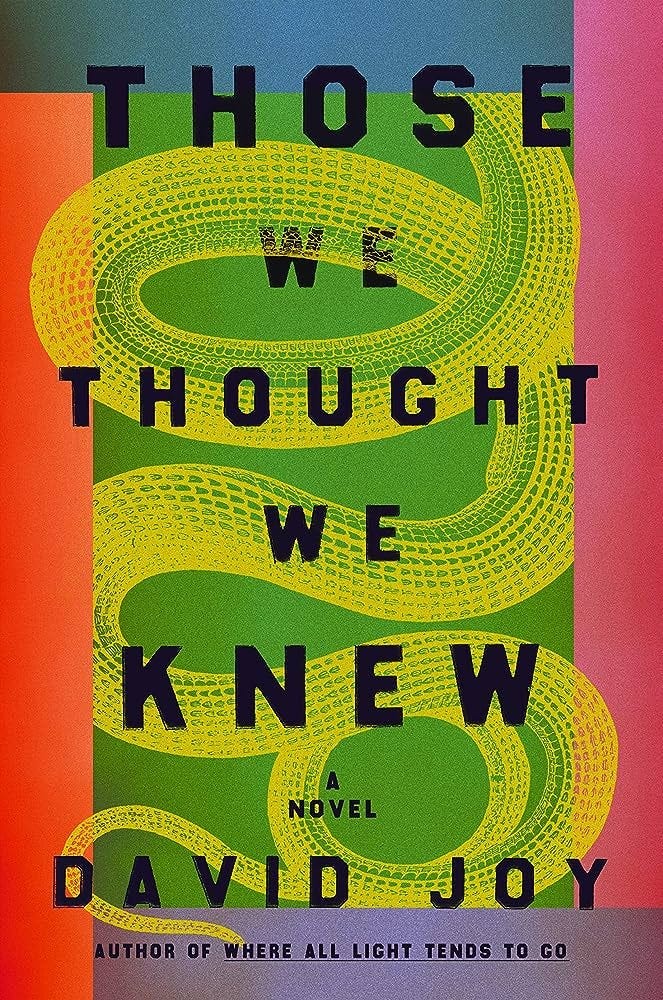
David Joy Those We Thought We Knew
I had never read Joy’s work until I picked up Those We Thought We Knew, and in fact, I wouldn’t have even picked up the book if someone didn’t recommend it. Joy dedicates the novel to Marie Cochran, the founder of the Affrilachian Artist Project, and she mentioned the book to me. When she mentioned it, I went to the book launch and heard Joy read an excerpt then I wanted to read more. The novel moves back and forth between a cast of characters, but the main thrust surrounds Toya Gardner, an artist who returns home to Sylva and uses her art to engage in public protest, first by drawing attention to the removal of Mt. Zion AME Church and the bodies of those interned there to make room for a building on Western Carolina University’s campus and second by protesting the Confederate statute of Sylva Sam in front of the old courthouse which is now a library. These public art projects ignite the community, on both sides, and lead to Toya’s murder. What grabbed my attention in Joy’s novel, though, centers on the ways that individuals consciously or unconsciously ignore issues of racial injustice around them, specifically because as whites they do not have to think about these issues.
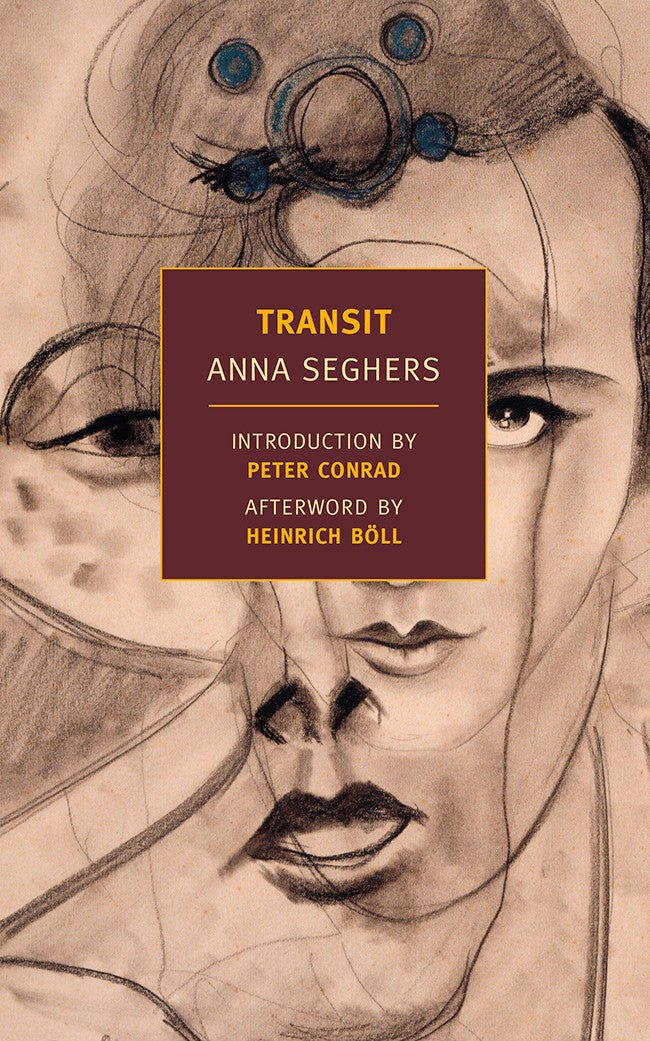
Anna Seghers Transit
Another book that I read in preperation for my study travel trip was Julie Orringer’s The Flight Portfolio. Orringer’s novel led me to Seghers’ Transit, which originally appeared during the war in 1944. Both Seghers’ and Orringer’s novel focus on efforts by individuals in Marseille to get refugees out of Europe during World War II as the Nazi war machine marched across the continent. Seghers novel focuses on an unnamed narrator who escaped a German concentration camp in 1937 and end up in Marseille, at the tip of Europe, looking for transit out of Europe and refuge elsewhere. The first-person narration and the liminal, constrained feeling of the narrative stand out to me with Transit. It is very much a modernist novel, and Seghers’ use of an unnamed narrator, whose perspective we see throughout the novel, drives home the uncertainty and fear of the moment, the myriad thoughts running through the heads of refugees during the war. Along with all of this, Seghers’ novel provides an historical perspective, albeit through fiction, of Marseille during the war and the chaos of the port city as individuals sought to escape Nazi oppression.
There are so many other books I’ve read this year that I’d recommend from Pankaj Mishra’s From the Ruins of Empire: The Revolt Against the West and the Remaking of Asia to Chimimanda Ngozi Adichie’s Americanah and beyond. Sadly, I don’t have the time to do that.
What are some of your favorite books this year? As always, let me know in the comments below. Make sure to follow me on Twitter @silaslapham.
 Interminable Rambling