
For the past few years, I have set various reading goals for myself. I initially did this to keep myself on a schedule with reading because I know that if I have a goal to reach, I will do my best to reach that goal. I started off small, with a bar of 60 or so books a year, and once I hit that, I started to increase the number. As the years have progressed, I have moved the bar higher and higher. This year, I set my reading goal for 150 books, and I have already surpassed that number. By the end of the year, I hope to have read 185 books. I’ve said before that I never thought I could read this many books, even though I teach literature, but once I got into a routine of reading everyday, I kept going. I can’t go a day without reading something. It has become a habit. Earlier this year, I wrote a post about what I had been reading up to that point, and today I want to highlight a few standout works that I read or reread this year.
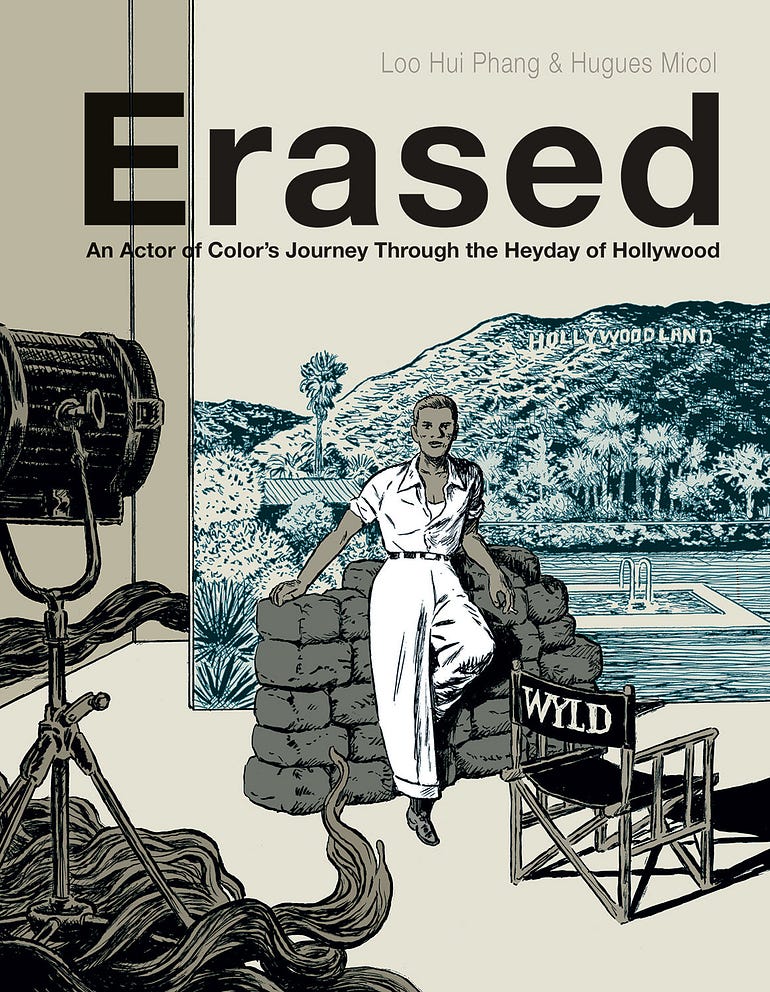
I vary up my reading selections to keep myself interested, moving from fiction to history to nonfiction to graphic texts to drama and elsewhere. I find that this helps me expand what I read, pulling me in different directions. Earlier this year, I read Loo Hui Phang and Hugues Micol’s Erased: An Actor of Color’s Journey Through the Heyday of Hollywood, a graphic novel about Maximus Wyld, a mixed-race (Black, Chinese, and Indigenous) actor that history has forgotten. Initially, I read it in the spring to review it for the International Journal of Comic Art, and I after I read it for the first time, I knew I wanted to teach it in a course, so I decided to teach it in my composition course.
Erased deals with a myriad of topics, from the ways that media creates myths and stereotypes to the ways that race exists as a social construct to discussions of what it means to be an America. Tracing Wyld’s life, Phang and Micol start with his discovery in the 1930s till his banishment from the public eye due to Joseph McCarthy’s House Un-American Activities Committee and the destruction of all of his film appearances. Within this trajectory, Erased calls upon us to think about what it means to be American, and Wyld, through his ability to play any ethnic role from a Mexican revolutionary to an Oriental dandy to an African American service member to an Indian chief epitomizes what it means to be America. As Rita Hayworth says at one point of Wyld, “His face was a faceted diamond. He could play them all. He was the Americans.”
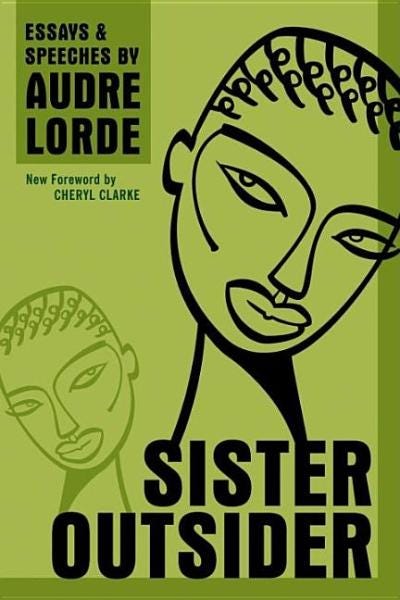
While thinking about some future courses, I knew that I wanted to teach Audre Lorde, specifically her collection of essays Sister/Outsider. I read The Cancer Journals a couple of years back, and from that moment, I knew that I wanted to and needed to read more from Lorde. Before I read Sister/Outsider in its entirety, I had read various selctions from it, including “Poetry is Not A Luxury,” “Uses of he Erotic: The Erotic as Power,” “The Transformation of Silence into Language and Action,” and more. I knew that Lorde’s essays deal with a wide range of issues, notably the failure of white feminists and others to include Black women, women of color, and LGBTQ individuals within their frameworks. For me, these moments stood out, specifically her conversation with Adrienne Rich where Lorde talks about her craft and her teaching at Tougalo College and Hunter College. On education, Lorde tells Rich, “The learning process is something you can incite, literarlly incite, like a riot. And then, just possibly, hopefully, it goes home, or on.”
Along with these moments, Lorde’s essay on her trips to Russia and Grenada, the latter following the United States’ invasion of Grenada in 1983, stood out. These essays bookend the collection, with Lorde, in many ways, sounding similar to Claude McKay in her discussions of Russia. Each points out things that they find useful from their trips and interactions with Communism, but each also notes the ways that Russia uses them to further its own interests. “Grenada Revisited: An Interim Report” details the imperialistic impulses with United States foreign policy and points out that the invasion served partly as a balm for the failure in Vietnam. Notably, Lorde highlights the ways that the press and government used language to “justify” their actions. She writes, “This language is calculated to reduce a Black nation’s aspirations in the eyes and ears of white americans already secretly terrified by the Black Menace, enraged by myths of Black Progress, at the same time encouraged by government action never to take the life of a Black person seriously.”
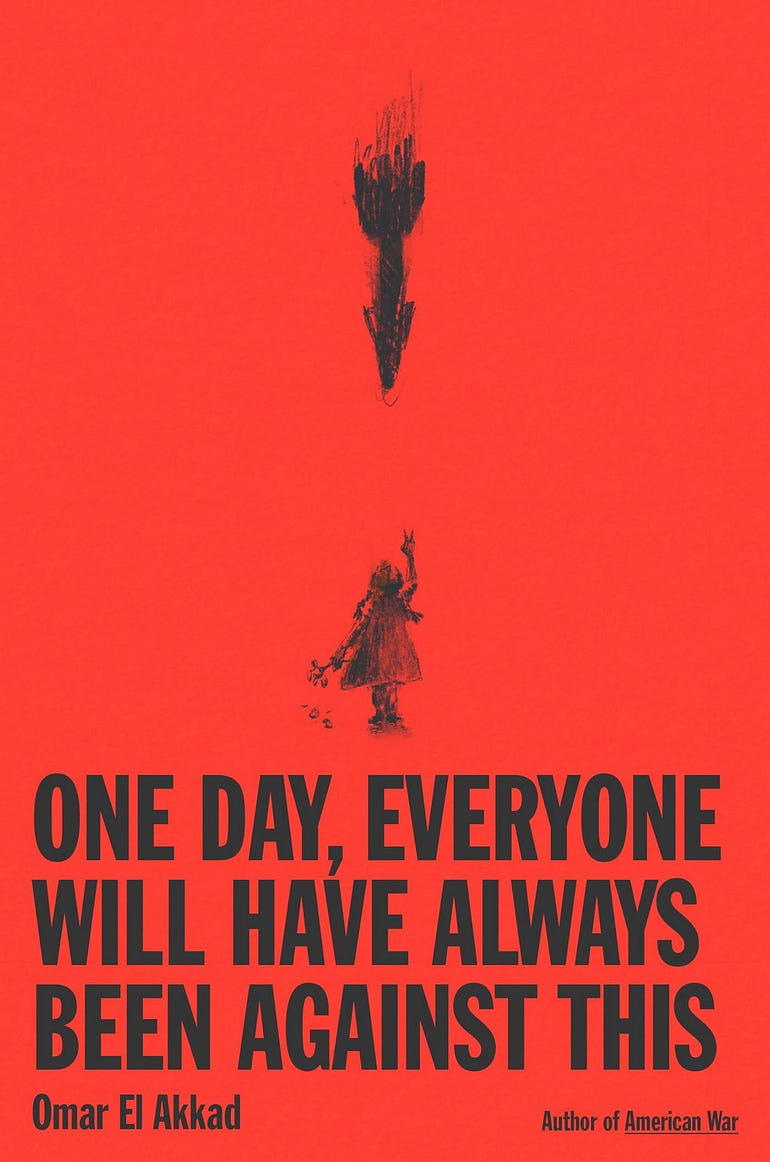
Along with Audre Lorde, I read Omar El Akkad’s latest, One Day, Everyone Will Have Always been Against This. I picked up El Akkad’s book solely based on the title and the cover and the title because those things explicitly dealt with the assertion that everyone proclaims vociferously about genocidal and violent events of the past: “If I was live in ________ I would have resisted and helped others.” El Akkad’s book, focusing on the genocide in Palestine, confronts individuals’ complacency in the moment as violence and death reigns, and he calls out those who will, when the dust settles, proclaim they were always against the genocide. El Akkad’s memoir is damning, and it is a much needed memoir at this moment, or any moment.
One Day, Everyone Will Have Always been Against This challenges us to remove ourselves from the complacency of our modern existence, our life as normal, and to stand up and speak out against atrocities. El Akkad pokes the skin of us who fear what we will lose if we even remotely speak out while others lose their very lives. He reminds us, as well, that we must each do what we can, in whatever capacity that may be. He says, “These acts of overwhelming personal consequence shatter the brittle veneer of the world as a place of total self-interest. But even the smallest acts matter.” That can include writing a social media post, donating to a relief agency, speaking to friends, calling members of congress, reading, and more. We can train ourselves not to fear what we may lose, but in small acts of resistance, just as we train our muscles, “by walking away from the most minor things — trivial consumables, the cultural work of monsters, the myriad material fruits grown on stolen ground — and realize in the doing of these things that there is a wide spectrum of negative resistance.”
There are so many books from this previous year that I could add to this list. Since I do not have the space to detail every book that I read and what I got from it, I will leave you with a list of some of the books I enjoyed and that I recommend for one of your next reads.
Claire Keegan Small Things Like These
Margaret Atwood The Handmaid’s Tale
James McBride The Heaven & Earth Grocery Store
Juan Rulfo Pedro Páramo
Mary Berg The Diary of Mary Berg: Growing Up in the Warsaw Ghetto
S.A. Cosby King of Ashes
Abdulrazak Gurnak Afterlives
Rachel Kadish The Weight of Ink
Zora Neale Hurston Moses, Man on the Mountain
Claude McKay Banjo
Patrick Horvath Beneath the Trees
What books have you enjoyed reading so far this year? What books did you enjoy reading this year? As usual, let me know in the comments below. Make sure to follow me on Bluesky @silaslapham.bsky.social.
 Interminable Rambling