
Last post, I wrote about Richard Wright’s deployment of music in Uncle Tom’s Children. That post made me think about one of the songs that appears in Bethesda’s recent video game Fallout 4. The game, which takes place during the aftermath of a nuclear war that decimates the world’s population and leads to a post-apocalyptic environment, relies heavily on a mid-twentieth century aesthetic in regards to the looks of technology, music, and other elements. As the player traverses the game’s Wasteland, he or she can tune in to local radio stations, one of which is Diamond City Radio. Amongst the station’s songs, the DJ plays Danny Kaye and the Andrews Sister’s version of “Civilization (Bongo, Bongo, Bongo)” (1947).
Highlighting the lack of “civility” that the West provides even further, the song concludes with a comment on the threat of nuclear war: “They have things like the atom bomb/ So I think I’ll stay where I “ahm”/ Civilization, I’ll stay right here.” Essentially, the song plays on old tropes of the pastoral and the “noble savage,” hearkening back to characters like Hope Leslie, Hobomok, and others. Overall, it presents an interesting study from the mid-twentieth century in relation to other images of the same period such as the Tom and Jerry cartoons and other media of the period.
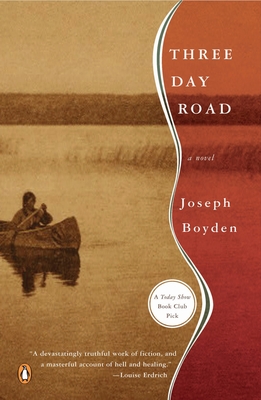 For Niska, the residential school proved to be a place where she felt like a captive. In fact, the chapter that describes her experiences there is entitled “Kipwahakan: Captive.” Serving as a program to try and assimilate Niska and her sister Rabbit, the school causes Niska to flee because of the treatment she receives. In Moose Factory, the community seeks out Niska because “[w]ord had filtered through to the [Hudson Bay] Company men that there was an Indian girls wandering Moose Factory who was not yet old enough to marry but who was as uncivilized as an animal” (84). So, the men went to Niska’s mother and convince her to let her daughter go to the school to learn about God. If the nuns ever caught Niska speaking in her own tongue, “they’d force lye soap I to [her] mouth” and starve her for multiple days (85). They also sought to remove any indication of physical links to her family and culture, preparing “to remove the black hair that reached to [her] waist as a symbol of wemistikoshiw [white] authority, of [her] defeat” (85).
 Niska does not give in to the nuns’s teachings and runs away; however, Xavier’s mother Rabbit remains. They changed Rabbit’s name to Anne and kept Niska away from her, afraid that she would alter Anne’s training. When Niska finds her mother after running away, her mother asks about Rabbit, and Niska simply replies, “She is called Anne now” (87). Her mother understands without further comment. This separation between Niska and Rabbit presents an interesting dichotomy. Even though Rabbit chose to remain, and assimilate, her son Xavier still experiences discrimination. Rabbit wanted a better life for Xavier, but that did not occur. Again, this recalls Boudinot who initially saw assimilation as the key to staving of Cherokee removal.
 Interminable Rambling