
Whenever I work on a syllabus, I always have some amorphous idea for a theme and for the texts I want to use in the course. For introductory composition courses where the goal is to teach students to write argumentative essays and move towards the incorporation of sources into their work, I always structure the course around personal narratives because, for me, starting by writing about ourselves tells us about who we are as individuals and provides us with a foundation to look outward to others. I think about Lillian Smith in these instances. In a letter to Horace Kallen in 1954, Smith wrote, “When I want to find something, I write a book. It is my way of searching. Not to give the world ‘answers’ but to find them myself.”
Writing, specifically a writing where we center ourselves in the writing, allows us to discover the world around us through our grasping and clawing as we search for “answers.” Those answers aren’t always what we seek or what we desire, but they tell us about who we are and what we think. They tell us about how we view the world. They expand our understanding of ourselves and the world we inhabit. For this reason, I structure my introductory composition courses around personal narratives.
When thinking about texts for this semester, I wanted to do memoirs instead of individual essays. So, I chose two memoirs by musicians and artists and two by academics. Each of these memoirs deals with multiple topics from creativity and artisty to death and trauma. As well, they provide other themes for students to explore. I’m looking forward to this course, and below, you will find the syllabus for my most recent introductory composition course.
Course Description and Objectives:
Why do we write? Why do we create? What purpose do these acts serve in our lives? We do this thing for multiple reasons. We do them to learn about the world around us. We do them to convey what we learn to others. We do them to help us work through our thoughts. Ultimately, though, these things help us to learn more about ourselves, forming our identities and helping us to confront our surroundings. We create to discover.
In the process of creation, we engage with our very beings as well as with the communities we inhabit and individuals we will never physically meet, conversing with them across time and space. As Lillian Smith puts it in when she describes why she wrote Killers of the Dream, a memoir where she explored what Jim Crow and segregation did to herself and other whites in the South, “I was in dialogue with myself as I wrote, as well as with my hometown and my childhood and history and the future and the past. Writing is both horizontal and vertical exploration.” Smith highlights that when we write we explore our inner beings along with our interactions with those around us, the horizontal, and the spiritual, the vertical.
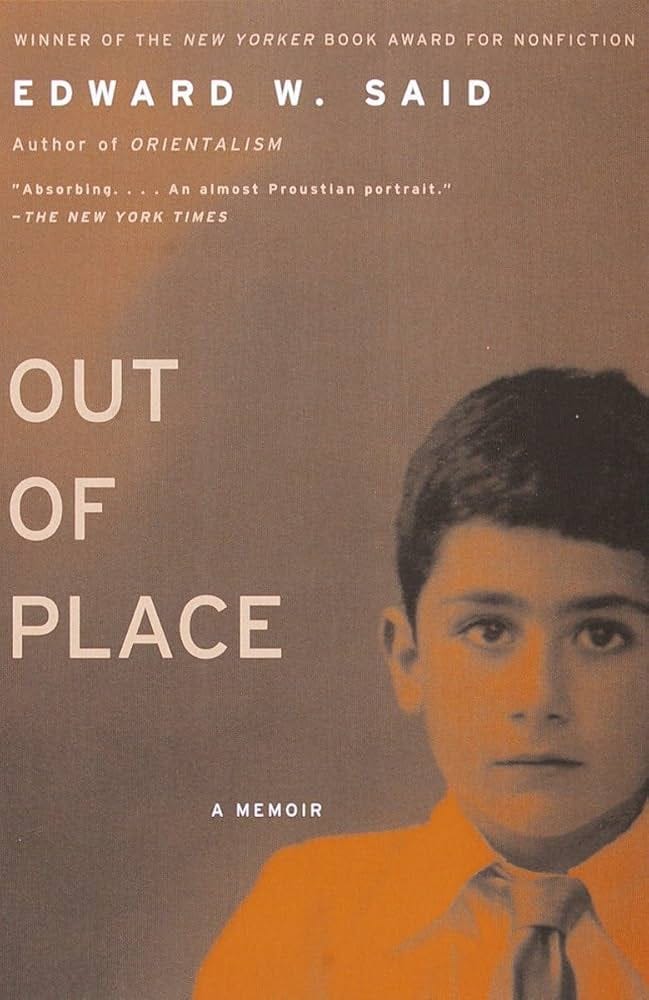
When we do this, we create the world we inhabit. In Out of Place, Edward Said begins by writing, “All families invent their parents and children, give each of them a story, character, fate, and even a language.” Said details how we formulate the stories we tell, and in the process of formulating these stories we become inventors, creating our “parents and children,” imbibing them with characteristics that we place upon them. We craft them, through our words, and in the process, we learn about them as well as ourselves.
Along with inventing others, writing provides us with the opportunity to invent ourselves, crafting our own story and narrative. The need to tell our own stories pulls at our cores because if we do not tell our stories then others will do it for us, creating an image of us that may be far from our actual selves. Kathleen Hanna begins her memoir Rebel Girl: My Life as a Feminist Punk by stating, “Hair is growing out of my mouth. I am Rapunzel gone horribly wrong. If I don’t tell this story, it will choke me.” Hanna lays bare how writing her story, with all of its joy and trauma, serves as a means of survival, a means to keep herself from choking on herself.
It also provides Hanna with the chance to tell her own story, to not let others speak for her. Hanna continues, “I finally get to decide how my work is contextualized, what parts of my story should be told, and what needs to stay in the trash. I also get to reclaim my public identity.” Carrie Brownstein makes a similar statement at the start of her memoir Hunger Makes Me a Modern Girl when she writes, “I’ve always felt unclaimed. This is a story of the ways I created a territory, something more than an archipelago of identities, something that could steady me, somewhere that I belonged.”
How will you “create a territory” for yourself? How will you let the world know who you are? How will you “invent” the world you inhabit? These are only a few of the questions you will explore throughout the course of the semester as you write yourself into existence.
This course is designed to introduce you to the critical thinking, reading, and writing skills required in the university and beyond. The course will focus on writing effective, well-argued essays. We will accomplish these objectives through in-class discussion, in-class writing, and several essays. Over the course of the semester, you will write four essays or the equivalent of 15–20 pages of well-polished prose. By the end of the course, you will be able to:
· development of critical reading skills
· engage in writing as a recursive process
· recognize the structures of argument
· use writing and reading for learning, thinking, and communicating
· respond to the needs of various audiences
· discuss appropriate voice, tone, and level of formality
· integrate your ideas with those of others
In short, this course is set up to help you develop the writing ability that will allow you to succeed in college and in life beyond the university. There is no discipline that does not require writing, so writing well is a fundamental skill.
Along with writing, you should start reading everything you can, from novels to academic journals to magazines to web pages. Aside from practice in writing, which this course employs extensively, reading in many modes and genres is the best way for you to improve your command of the language and to engage in rhetorical conversations. Additionally, reading provides you with a greater breadth and depth of knowledge.
Primary Texts:
Losh, Elizabeth, Jonathan Alexander, et. al. Understanding Rhetoric: A Graphic Guide to Writing. 3rd ed., Bedford/St. Martin’s, 2021.*
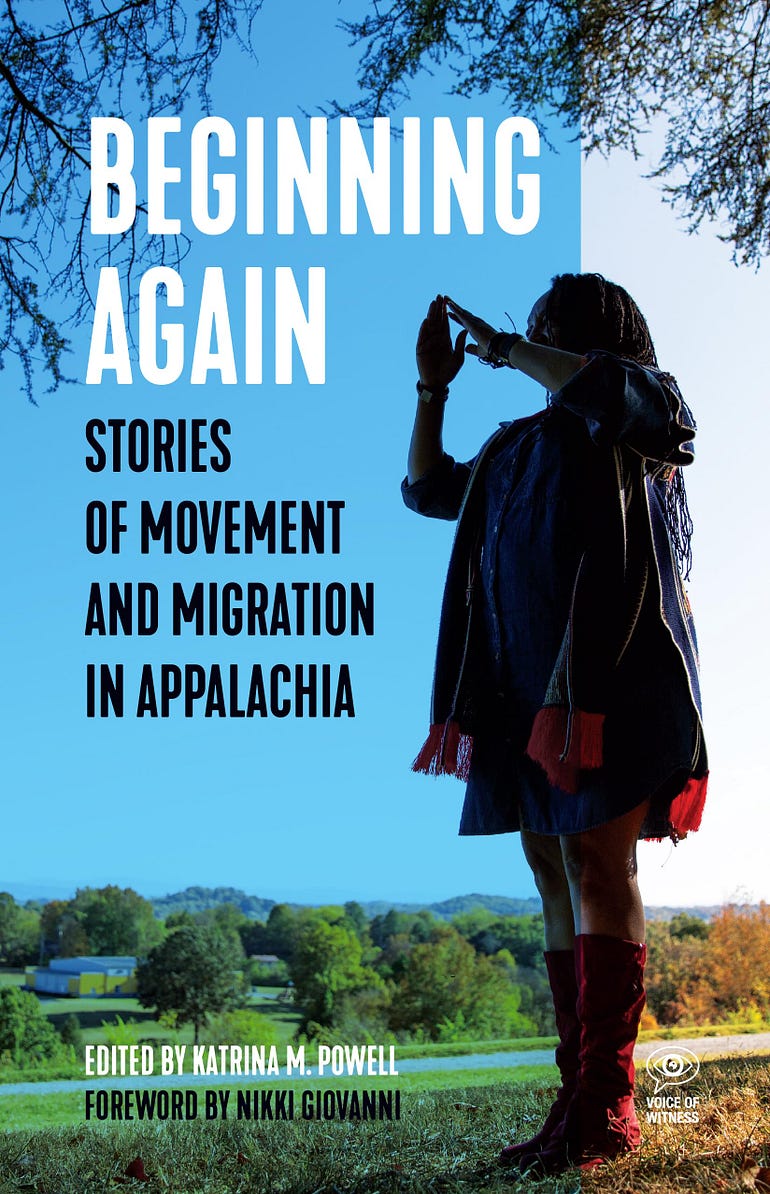
Beginning Again: Stories of Movement and Migration in Appalachia. Edited by Katrina M. Powell. Haymarket Books, 2024.
Brownstein, Carrie. Hunger Makes Me a Modern Girl: A Memoir. Riverhead Books, 2016.
Hanna, Kathleen. Rebel Girl: My Life as a Feminist Punk. Harper Collins, 2024.
Rushdie, Salman. Knife: Meditations After an Attempted Murder. Random House, 2024.
Said, Edward. Out of Place: A Memoir. Vintage Books, 2000.
For the * I will provide the readings.
Course Requirements and Explanation of Grading
Attendance and Participation 10%
Discussion Boards 20%
Personal Music Narrative 10%
Travel Narrative 15%
Personal Identity Narrative 20%
Expanded Personal Identity Narrative 25%
Late Essay Policy:
You have one week after the due date to turn your essay into me. However, you will not receive any comments or marks on the paper. Instead, you will just receive a grade after I read it. Essays will not be accepted more than a week after the due date. This does not apply to the “Expanded Personal Identity Narrative.”
Attendance and In-Class Participation — Although I believe that as adults you should have control over your own education, attendance is vital to your success in this course. Much of your learning and work will take place in class, and you will be involved in discussing the readings in class. To fully comprehend and hopefully appreciate the texts, you should come to class fully prepared. This means you should have read the homework and completed any assignments for class.
You will be held accountable to the following attendance policy: 4 or more unexcused absences will result in a grade of FA (failure due to absences). If you have an excused absence — e.g., university-sponsored trip, doctor’s visit — you must provide verification to the course instructor, in writing, no later than one week after the absence occurs. Tardiness is disruptive and disrespectful to your peers and to the teacher. Every two instances of tardiness (defined as 5 minutes late or more) will be counted as one absence.
Daily attendance is not sufficient to guarantee you a passing participation grade. Any activities taking place during class time contribute to your in-class participation grade. This includes note-taking during lectures, actively participating during discussion, and otherwise participating in class activities. There will be small group discussions during classes and other activities that will be part of this grade.
Discussion Boards — You will be required to engage with your classmates on discussion boards throughout the semester. These discussion boards will include reflections on the readings and parts of your writing for your essays. You must post and also respond to two people’s posts on the forum to receive full credit for the assignment. For some weeks, I will have guided prompts.
Essays — You will write four drafted essays, which will equal out to 15–20 pages of polished prose, this semester. Polished prose refers to work that has been written and revised more than once. As part of this process, you will need to be ready to read and comment appropriately on the work of your classmates and accept their comments on your work. Peer review is a vital component of this class, and it is to be conducted respectfully and only within the context of the classroom. Each essay will be guided by the respective chapters in your text. Make sure you back up copies of each essay on a flash drive or with another format.
· 3–4 page Personal Music Narrative
· 3–4 page Travel Narrative Essay
· 4–5 page Personal Identity Narrative
· 5–6 page Expanded Personal Identity Narrative
 Interminable Rambling