Category: american literature

+

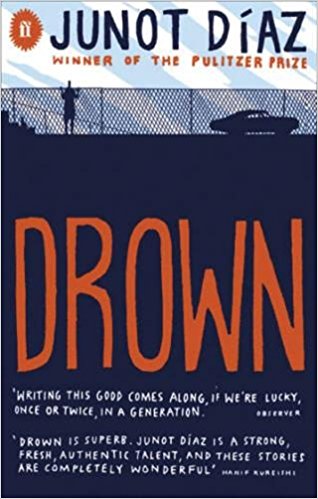
Education and Poverty in Junot Díaz’s “Drown”

Reading Junot Díaz’s “Drown,” my mind constantly kept going back to texts such as Lorraine Hansberry’s A Raisin in the Sun and James Baldwin who said, “Anyone who has ever struggled with poverty knows how extremely expensive it is to be poor.” Along with these items, I also thought about the power structures that keep Yunior de Las Casas in subjugation and essentially strip … Read More Education and Poverty in Junot Díaz’s “Drown”

Big Walter in Lorraine Hansberry’s “A Raisin in the Sun”

Throughout Lorraine Hansberry’s A Raisin in the Sun, one character hovers over the entire play as a specter of the past. This character is Big Walter, Lena’s husband and Benetha and Walter Lee’s father. Even though he does not appear on stage in the script, he exists as an important part of the narrative. His death, which we do not see, causes the action … Read More Big Walter in Lorraine Hansberry’s “A Raisin in the Sun”

+

Republican Motherhood and Charlotte Perkins Gilman’s “The Yellow Wall-Paper”

A few items stuck out as I prepared to teach Charlotte Perkins Gilman’s “The Yellow Wall-Paper” this semester. The first aspect of the short story that caught my attention was the multiple uses of specific words or forms of specific words: creep (20), sun (8), crawl (4), and skulk (1). Each of these words, except for sun, has a connotation of hiding or concealment. … Read More Republican Motherhood and Charlotte Perkins Gilman’s “The Yellow Wall-Paper”

+

Discussing Stephen Crane’s “The Bride Comes to Yellow Sky” in the Literature Classroom

This semester, I taught Stephen Crane’s “The Bride Comes to Yellow Sky” for the first time, and there are a few aspects of the story that I think are worth considering. The first item is a hypothetical exploration of the voices we hear in the text, specifically the voices of the drummer and the eponymous bride. The second has to do with the interactions … Read More Discussing Stephen Crane’s “The Bride Comes to Yellow Sky” in the Literature Classroom

+

Exploration and Colonization in John Cheever’s “The Swimmer”

At the end of F. Scott Fitzgerald’s The Great Gatsby (1925), Nick Carraway goes over to Gatsby’s dark, empty house then heads down to the beach where he sprawls out on the sand and begins to think about the past, the time before he or Gatsby or Tom and Daisy or anyone else built enormous structures on East Egg and West Egg. He becomes … Read More Exploration and Colonization in John Cheever’s “The Swimmer”