Category: american literature

+

Language in Ernest Hemingway’s “The Battler”

Last post, I wrote about the ways that Ernest Hemingway highlights the ways that language constructs race in his story “The Doctor and the Doctor’s Wife.” There, I examined the ways that Dick Boulton and Henry Adams describe the logs that they pull out of the sand. Are they “stolen” or free for the taking. While Hemingway zeroes in on the ways that Boulton … Read More Language in Ernest Hemingway’s “The Battler”

+

Language in Ernest Hemingway’s “The Doctor and the Doctor’s Wife”

Writing about the connections between Jean Toomer’s Cane and Ernest Hemingway’s In Our Time, Margaret Wright-Cleveland argues that both texts examine social constructions of race. Specifically, she notes that Hemingway’s text “makes clear that both whiteness and blackness are racial constructions.” As such, both Toomer and Hemingway position “race as a formative idea for American modernism.” Today, I want to look at the ways … Read More Language in Ernest Hemingway’s “The Doctor and the Doctor’s Wife”

+

“Everything would be the same–as it always was.”

In last Thursday’s post, I wrote about the image of dirt in Lillian E. Smith’s Strange Fruit (1944). Today, I want to continue looking at Smith’s novel. Instead of focusing on Tracy Dean as I did in the last post, I want to take a moment and examine the ways that Nonnie and Bess Anderson, along with Dessie, react to what occurs in the … Read More “Everything would be the same–as it always was.”

+

Dirt in Lillian E. Smith’s “Strange Fruit”

Lillian E. Smith’s Strange Fruit (1944) has been on my shelf for a few years now. Right now, it sits back in the United States, untouched and locked away in a box in a storage room. When I purchased it, at a book sale, it was one of those books that I had heard about and that looked relevant to my research. I bought … Read More Dirt in Lillian E. Smith’s “Strange Fruit”

+

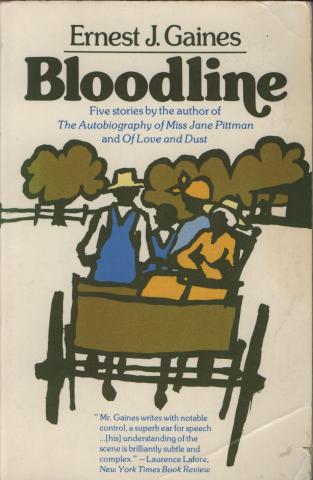
Interracial Intimacy in Ernest Gaines’ “Bloodline”

As I read Ernest Gaines’ “Bloodline” recently, the interactions between ‘Malia and Frank Laurent stood out. The story, essentially, centers around Copper, the son of Frank’s brother Walter who raped Copper’s mother. Copper has returned to the Laurent plantation to claim what is his, by birth. Essentially, he arrives to overthrow the system that denies him an existence due to the fact that his … Read More Interracial Intimacy in Ernest Gaines’ “Bloodline”