During our “Black Expatriate Writes in France” course, I had students journal and reflect upon their travels. I decided to keep a journal as well, and to this point, I have done three entires. The first one in Avignon took me a few days, because of various things, but I finally finished it before we left the city. Over the next few posts, I plan to share with these entries with you. They are very scattered, but I hope you find them useful.
8 May 2023
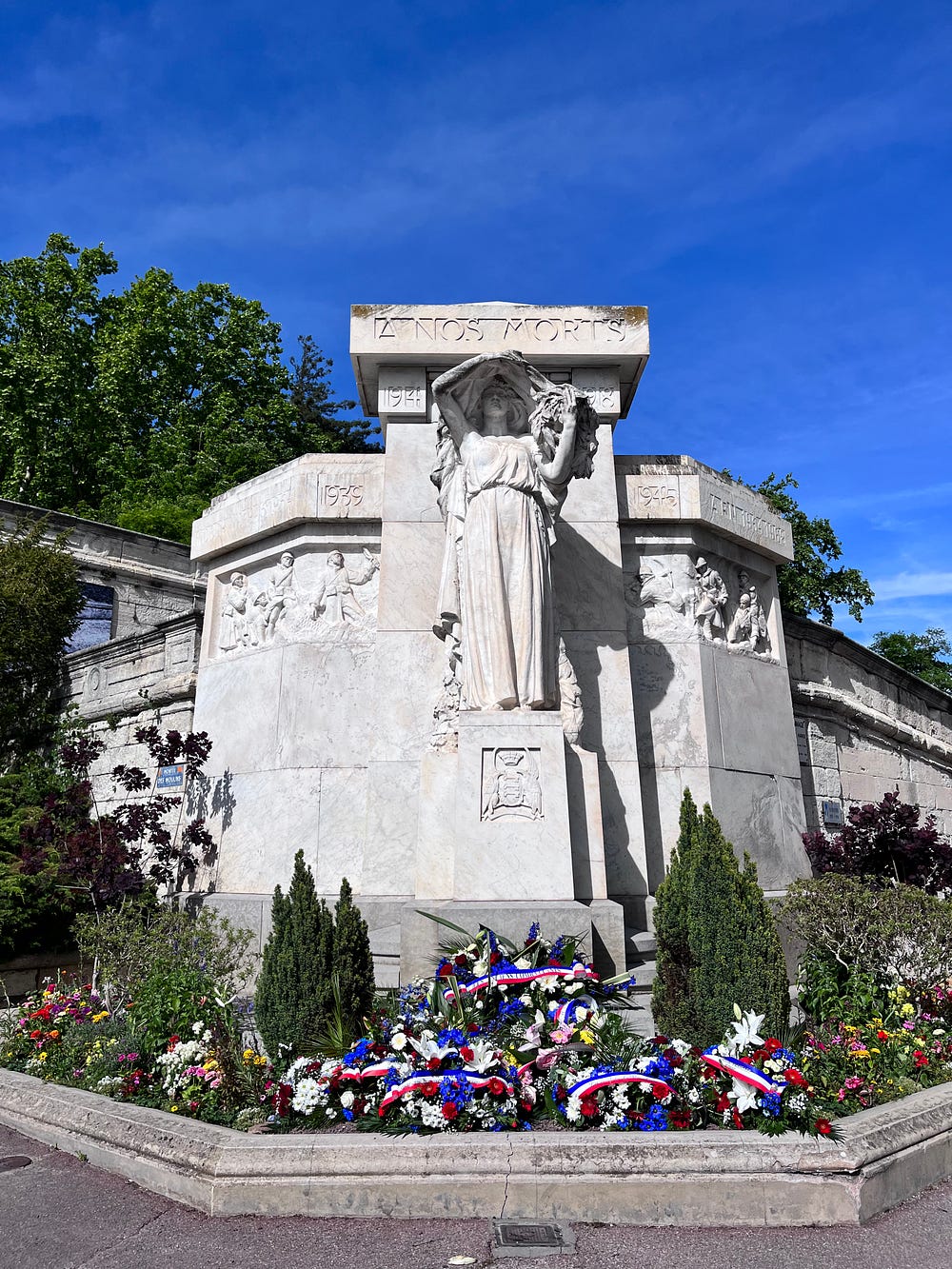
Jes suis en Avignon. When we planned this trip, I had no idea we’d be arriving in France on the 78th anniversary of V.E. Day. I was expecting to see memorials and festivities, but I didn’t see much. Walking in the Rocher des Dames, I saw a monument with flags and pageantry to the French soldiers who fought during the world wars.
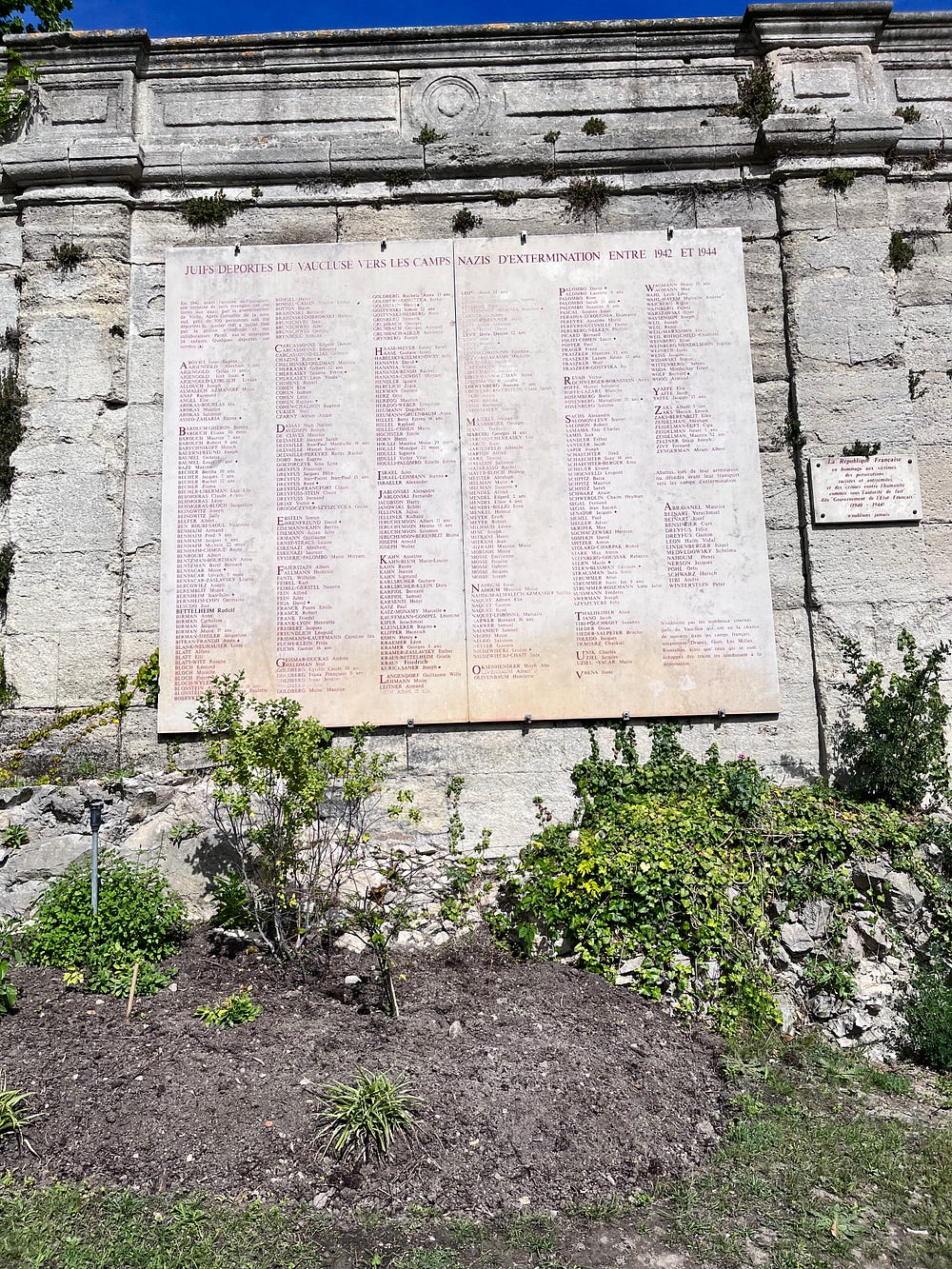
A little further on I saw a memorial to Jueifs Deportes Dr Vueluse Vers les Camps Nazis d’Extermination Entre 1942 et 1944. The memorial contained a large number of individuals murdered during the Holocaust between 1942–1944.
On the flight from Atlanta to Paris, I didn’t think about the Holocaust. However, I kept thinking about our current moment and what our kids face today. The day before we left, eight people were murdered in Allen, TX, indiscriminately. The day we left, more individuals were murdered in Brownsville, TX, at an immigration center. Events like this have been occurring multiple times a week, and as we flew over the Atlantic, I thought about my students and my own kids.
I thought about how these two weeks will be a reprieve, an escape, for the students and myself. I won’t think, continually, about the threat of random violence being enacted upon others. They will be able to breathe. We’ve just arrived, and they seem relaxed, except for the jet lag.
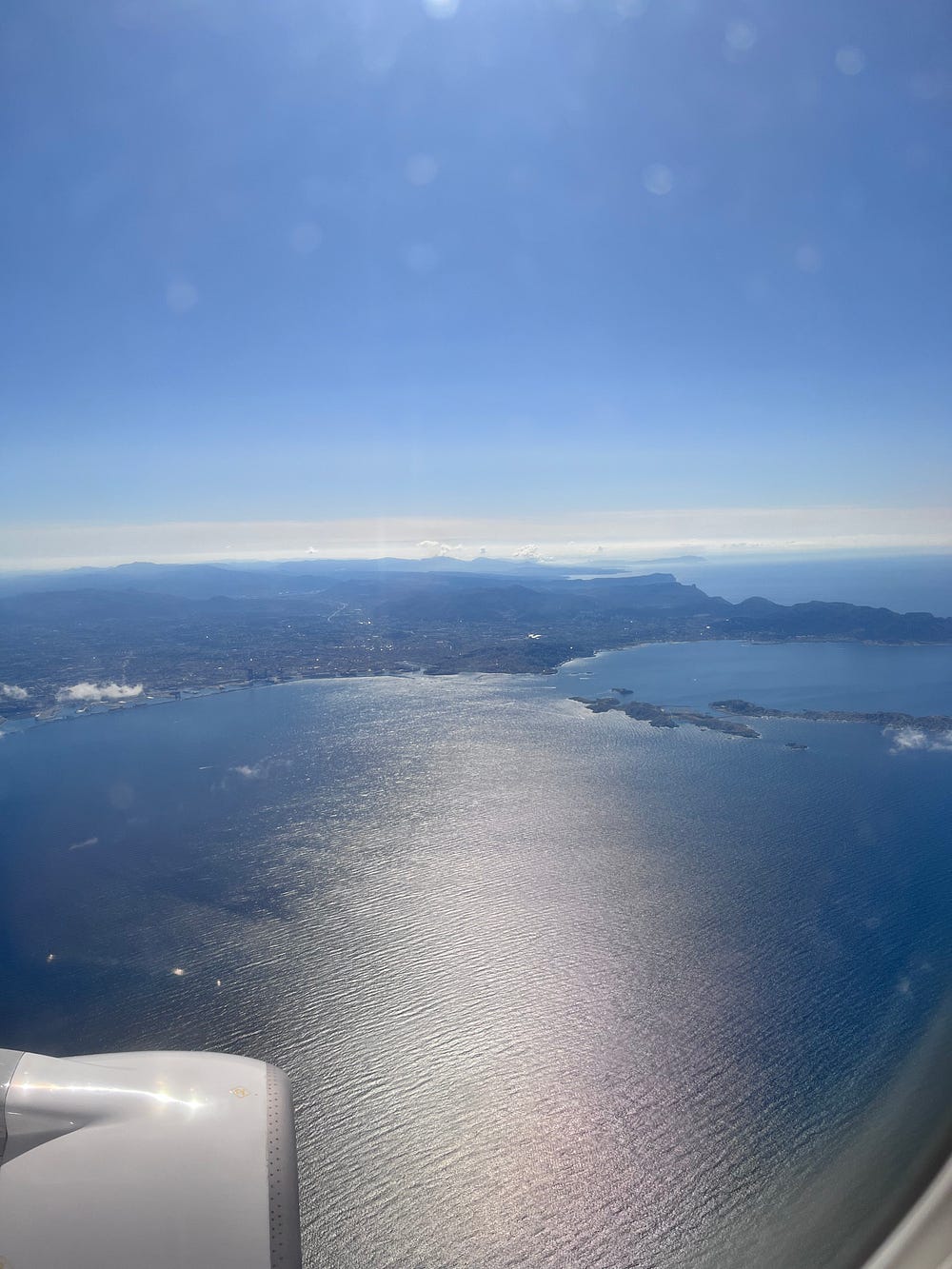
Flying into Marseille, we crossed over part of the Mediterranean before turning around and landing. Up in the air, above the water, I recalled a passage from Julie Orringer’s The Flight Portfolio, a novel about Varian Frye and the Emergency Rescue Commission saving Jews, artists, thinks, and others in Marseille during WW II. Describing the sailing of a ship crossing the Atlantic, Orringer highlights how much lies beneath the surface: animals, plants, mountain ranges. All of these submerged and out of view as the ship glides along the surface.
The fascist tendencies we see today are nothing new, but they amplified quickly over the past few years through the rhetoric of victimhood and myth-making. All of this leads to violent reactions to a perceived threat to white supremacy that honestly doesn’t and never has existed. There is a fear of what lies beneath the surface, imaginary monsters that must be conquered at all costs. This fear breeds violence, a violence that kills indiscriminately and creeps into the psyches of those who white supremacists fear. One can see that the shooter in Allen, TX, was hispanic, and many view this fact as verification that white supremacy doesn’t exist. However, the perpetrator appears to have right-wing leanings steeped in white supremacist ideology.
Add to this the propagation of purposefully misleading propaganda, and you have full on fascism. On one level, I’m amazed people fail to recognize what they’re living through. However, I’m also not shocked by this lack of reflection. People fear themselves and the ease with which they can fall into the group of lemmings running off the cliff. We all do it to a certain point, and we must cognizantly force ourselves to gaze upon our reflections, the grotesque distorted image that stares us in the eye. When we do that, we’ll be able to diagnose the disease and begin to cure it, whatever it may be.
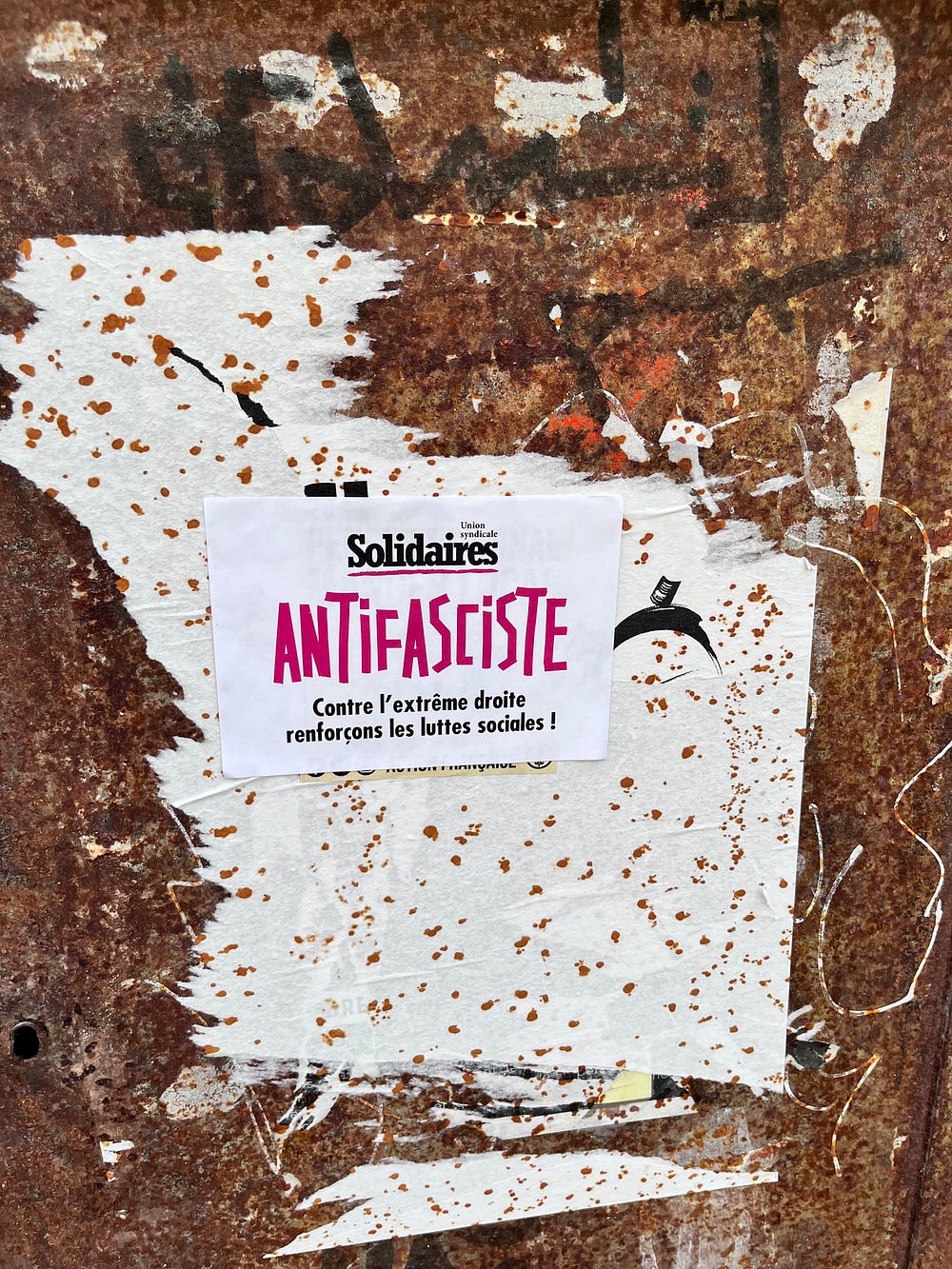
Yet, not enough people want to face themselves. They become complacent in their comfort, playing along in order to merely survive. When you strip away basic human rights like medical care, education, and other social services you create a populace that exists merely to survive day to day, even amidst the luxuries they enjoy. This mode of existence causes fear to spread because the illusion of comfort exists, but one problem and a Gofundme page goes up because unlike other nations, we fail to look out for our citizens. We just tell them who and what to hate then throw them lines of hope and cut the rope when thy start to climb upward.
I don’t know what to do or say, but I know that I want to impart to students how to critically engage with systems that seek to control them. I want to provide them with literature, art, music, and history that informs and inspires them. I want them to see connections that are happening. I can’t force them to do this, but I hope, in some small; way, this trip and class will help them see that there is a wide world out there that values people and their health and success.
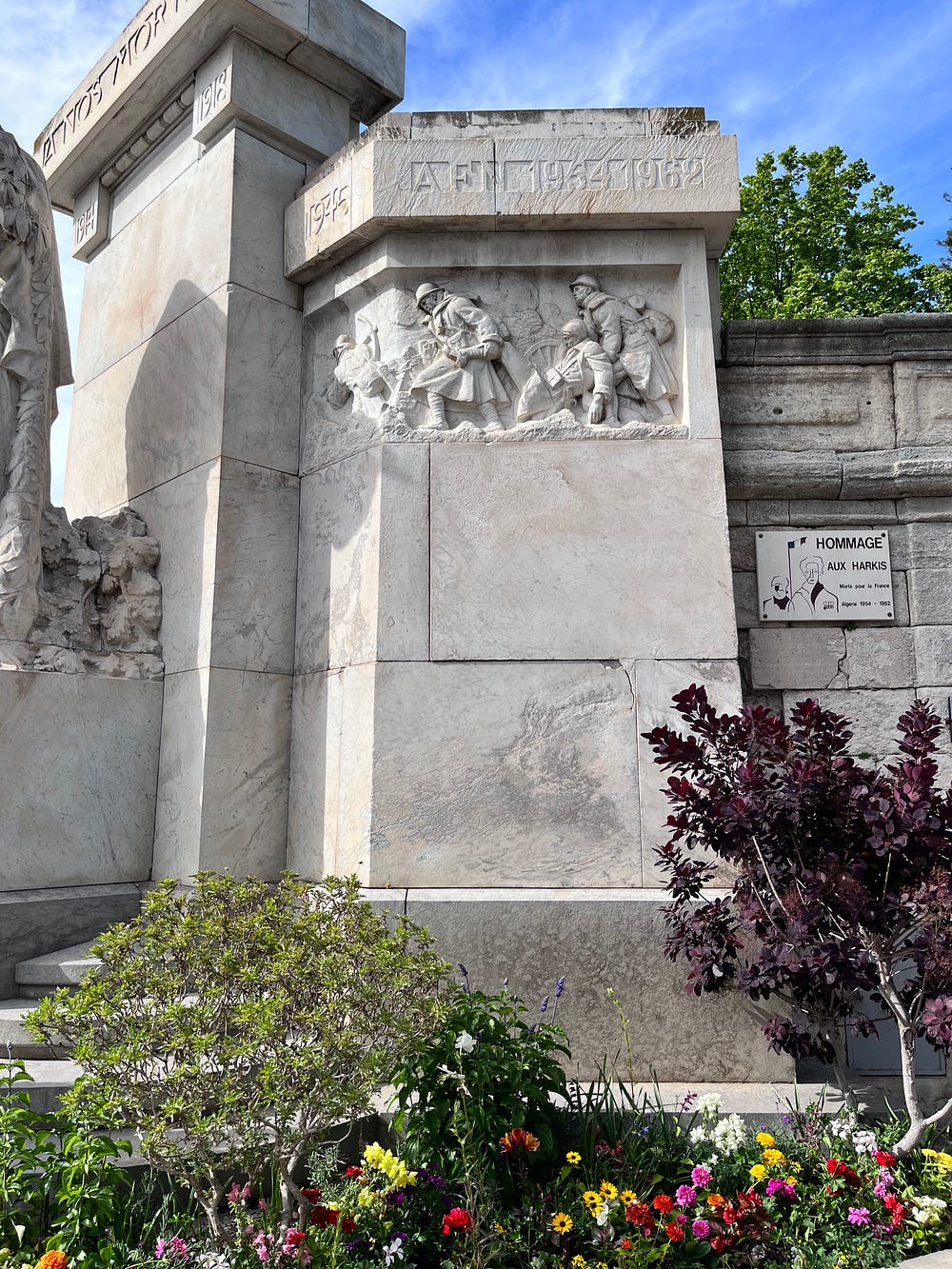
Postscript: As I walked back down from the garden after writing the journal entry, I stopped again at the monument to French soldiers and saw that one side honors those who fought and died during the Algerian War (1954–1962). It was interesting to see this and the ways the French recall this war because it was a war for Algerian independence from French colonial rule. This is one of the reasons I had students read William Gardner Smith’s The Stone Face. Along with this monument, I think about Michel Fabre’s chapter on Smith in From Harlem to Paris. Fabre talks about Smith’s confronting France colonialialism, but he fails to even mention the ending of the novel where Ahmed is among the 200 Algerians murdered and thrown into the Seine in 1961. This omission, in many ways, reminds me of the monument, a monument to the French, ignoring and erasing Algeria’s fight for their own freedom.