
When teaching Ernest Gaines’ Of Love and Dust (1967) this semester, I asked students to think about the hierarchy within the novel. When constructing the hierarchy, students constructed in a horizontal manner, with Marshall Hebert at the top, Sidney Bonbon on the rung beneath him, Louise beneath Bonbon, Pauline beneath Louise, then the Black residents of the plantation on the bottom rung. On the surface, this layout works because Marshall, the wealthy, white landowner does rest at the top of the hierarchy. His wealth and race allow him to this; however, while Marshall sits atop the hierarchy, the lower rungs become less clear. In fact, a linear hierarchy does not exist beneath Marshall; rather, we need to think of the structure as a triangle with multiple characters forming the wide base.
When we think about the power structures in Of Love and Dust as a triangle instead of a ladder, we realize that things are not nearly as clear cut as we initially suspect. Instead, we begin to see the ways that Marshall, who sits at the top of the triangle, uses his position to manipulate and pressure everyone beneath them. His machinations lead to the tensions between Bonbon and Marcus or Bonbon and the Black community. Marshall pits those beneath him against one another so that their fighting will increase his power and ultimately also increase his profits.
Jim lays bare this structure near the end of the novel when he talks about how “they,” in reference to Marshall and wealthy, white landowners, create the system and pull the strings. Jim asks what Marcus did wrong by killing a man in self defense, and he follows that question up by asking, “didn’t they give him the right to kill?” Those like Marshall condoned Marcus killing another Black man, in self defense of not, because they condoned the actions of Big Red and Cadillac when they each demanded things of Marcus such as part of his pay and cigarettes. When Marcus would go to the whites above the men, they would laugh and tell the men what Marcus said, leading to more requests.
Jim points out that to those in power “Marcus was just a tool,” just like everyone else in the novel below Marshall. “Like Hotwater was the tool,” Jim continues, “put there for Marcus to kill.” Or like Bonbon who was on the plantation to “work Marcus.” Jim even brings Pauline and Louise into the discussion, referring to them as “tools” on the grand scheme of Marshall’s machinations. Because of all of this, Jim comes to respect to Marcus. He sees the institutional structure that played Marcus against Hotwater that played Marcus against Bonbon that played Marcus against Pauline and on and on and on.
Jim realizes that he exists within the same system and ponders what what could “do against this big thing.” All of this causes Jim to think back to Bonbon’s words to him earlier. Bonbon told Jim, “We is nothing but little people. They make us do what they want us to do and they don’t tell us nothing.” Jim views Bonbon as white, but that does not equate to Bonbon being anywhere near equal to Marshall. As a Cajun, Marshall views Bonbon as inferior yet above African Americans in the quarters. Marshall views Bonbon’s malleable “whiteness” as a tool he can exploit to keep the African American characters in subjigation. What Bonbon fails to realize, though, is that Marshall has no desire to allow Bonbon equal access to anything he has.
Over the course of the novel, Marcus stands up to the system, but he cannot topple Marshall because Marshall allows everything to happen. He allows Marcus to attempt to run away with Louise and he allows Bonbon to discover the plot, leading to Bonbon killing Marcus, something he says he didn’t want to do but felt, because of the societal constrictions, he had to do in order to maintain the society. Before this, though, Jim talks about the pride he feels for Marcus and how he worships Marcus’ decisions. Yet, he also sees Marshall pulling the strings and sowing fear and hate. He says, “Because it wasn’t Marcus who was doing this; it was the big people.”
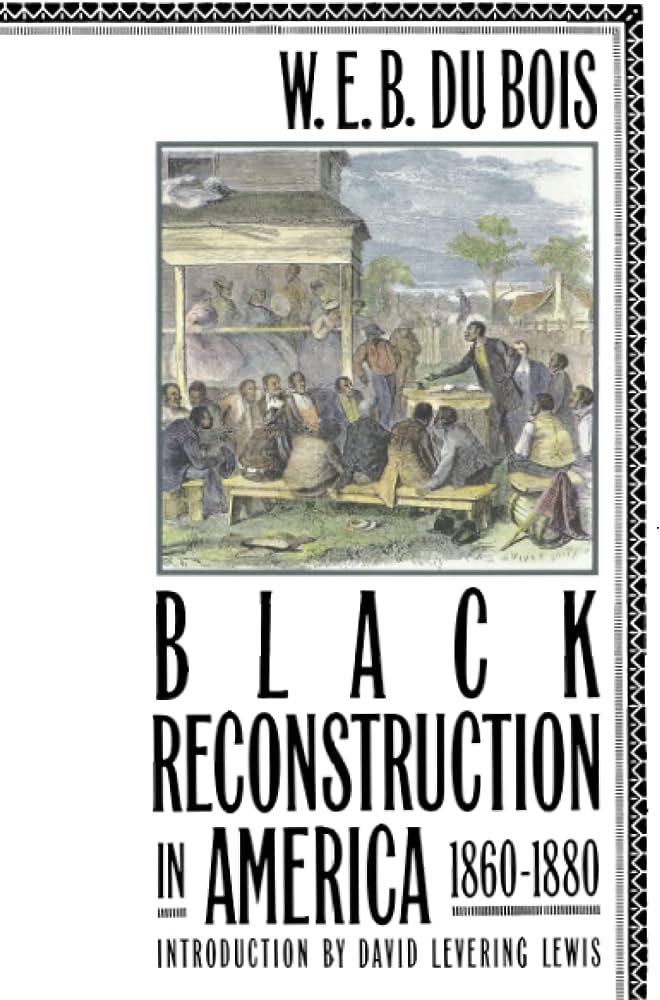
Of Love and Dust illuminates the ways that power works, through its severing of alliances between groups beneath those at the top. This is nothing new, as W.E.B. DuBois pointed out in his work Black Reconstruction. Writing about the Civil War, DuBois says war came about, among other things, “because the South was determined to make free white labor compete with black slaves” and “because white American labor, while it refused to recognize black labor as equal and human, had to fight it maintain its own humanity and ideal of equality.” Each group fought for their existence, for the ability to maintain their humanity. Bonbon fights for his humanity just as much as Marcus fights for his humanity. Louise fights for her humanity just as much as Pauline fights for her humanity. Everyone beneath Marshall struggles, and Marshall uses their struggles to increase his own power.
Following the Civil War, as Keri Leigh Merritt notes in Masterless Men, wealthy, whites such as Marshall maintained their possession. Merritt states, “By maintaining ownership of most of the Deep South’s remaining capital, former slaveholders were able to adapt to the new economic structure of the region by earning their primary income as landholders,” transitioning their roles from “laborlords to landlords.” Wealth whites, before the war, pitted Blacks and poor whites against one another, as DuBois points out above, and after the war, they continued sowing tensions, just in a different manner.
Lillian Smith understood the ways that wealthy whites sowed division between poor whites and Blacks. She laid it out in “Two Men and a Bargain,” and she also laid it out, at least in relation to the interracial romances in Of Love and Dust, at the end of “Three Ghosts” in Killers of the Dream. In “Three Ghosts,” Smith details the intersections of sex, sin, and segregation and the power these intersections maintain on society. At the end of the chapter, she describes white men sitting out front of a store watchinig a Black woman walk down the street. Those men, who watched the woman sashay down the street, and their leering, “had a great deal to do with high interest at the bank and low wages in the mills and gullied fields and lynchings and Ku Klux Klan and segregation and sacred womanhood and revivals, and Prohibition.” They ruled the roost from atop the triangle.
Jim says the same about Marshall Hebert. If Bonbon did something to Jim, then Jim could go to Marshall to seek help, even if Marshall wouldn’t provide it. However, Jim asks, “But where did you go when it was the rich white man? You couldn’t even go to the law, because he was the law. He was the police, he was the judge, he was the jury.” Mr. Rich White, as Smith called him, controlled everything. Marshall, being Mr. Rich White, would do everything in his power to maintain that control.
Gaines’ Of Love and Dust serves as a perfect microcosm of power and the ways that wealthy individuals wield their power to keep individuals beneath them from joining together in solidarity and fighting for their humanity. Of course, this is not all I can say on this topic. What are your thoughts? As always, let me know in the comments below. Make sure to follow me on Twitter @silaslapham.
 Interminable Rambling