
Thirty years ago, I discovered Sunny Day Real Estate while watching MTV’s 120 Minutes late one Saturday night. I saw the video for “Seven” and immediately fell in love with the Seattle band, rushing out as soon as I could to pick up their debut album Diary on black cassette, the norm for Sub Pop at the time. Over the years, I’ve been able to see them perform in support of The Rising Tide in 2000 and twice over the past year at Furnace Fest and recently in Georgia. As I watched them the most recent time, I kept thinking about being in the moment, enjoying the show instead of trying to film every moment. I kept thinking about the past, picking up Diary and then LP2 and then their breakup and then their getting excited for their reformation a fews years later and How It Feels to Be Something On and The Rising Tide.
Standing there watching Sunny Day Real Estate my mind, as it is wont to do now, started to think about memory and the past. I thought about the ways we construct memory, shaping and molding it to fit us and our feelings about ourselves. I thought about seeing Sunny Day Real Estate the first time in 2000 in New Orleans at The Parish, a club above The House of Blues in the French Quarter. As with most shows, I don’t remember specifics, but I remember the feel, the trip from North Louisiana to New Orleans and the atmosphere. That’s not unique, as we have seen lately with concert goers stating they don’t remember Taylor Swift’s concerts.
This “post-concert amnesia,” as Robert Kraft points out, is not unusual and not a cause for concern. Instead, it means that we are living in the moment, experiencing what is around us and taking it it. As Kraft states, “The broadest reason we forget is that we focus on experiencing the world, not remembering it. We don’t set out to remember the events in our lives. We set out to experience and understand them.” We seek to be in the moment, and that decision affects the ways that we engage with that experience. Our memories become a painting, a compilation of pieces, not specific threads or lines. It’s like thinking about my grandparents house when I smell salmon patties or eat peanuts. I have sensory images, not concrete films that play in my head with any sort of narrative structure.
These experiences shape us, they mold us, and as such we desire to remember them exactly as they happened, yet we can’t do that. Lillian Smith, thinking about her own past, contrasts photogophraphy and painting when thinking about memory. In her 1954 memoir The Journey, Smith writes, “The memory has so little talent for photography. It likes to paint pictures. Experience is not laid away in it like a snapshot to be withdrawn at will but is returned to us as a portrait painted over in our psychic colors, its form and patter structures on that of our life.” Our experienced memories, in essence, are not “fact,” as the event actually occurred. Rather, we paint the memories. We add our “psychic colors” to them, replaying them in our mind and changing them as we move further and further away from the initial experience.
Our accumulated knowledge and experience informs those memories, touching up the portrait that we pull off the wall. We look at it now and then, gazing at it from different angles, different perspectives. We pull out our paint brushes and paints and begin to touch up the portrait, adding things here, adding things there, until we return it to the wall so we can look at it anew. We keep doing this, gazing, touching up, gazing, touching up, again and again. Our memories become ever changing, not static as a photograph which encapsulates a specific moment in time.
Even with a photograph, which we assume depicts “fact,” we turn it over in our minds, just as we do the memory portrait. Our thinking about the image we took on a walk, at a family gathering, on a trip, or wherever, changes over time just as the mental portraits that make up our memory change over time. Again, we bring experience with us when we revisit these images. I think about this with pictures I’ve taken over the years.
Before we left Louisiana to move to Alabama, my daughter and I went to the Whitney Plantation. During our drive through South Louisiana, I came across what appeared to a lone tree in field, and the scene made me want to stop and grab a picture. The image, for me, sums up South Louisiana, my home state, and my past. It sums up where I’m from, even though I’m not from rural Louisiana. It sums up my love of Louisiana and the South, but it also sums up the history I’ve grown to learn about Louisiana, the violent history of the land that Ernest Gaines writes about or that I learned from Frank Yerby. It represents, for me, so much, and as I get older and look back on this picture, which I took almost a decade ago, my thoughts and feelings change.
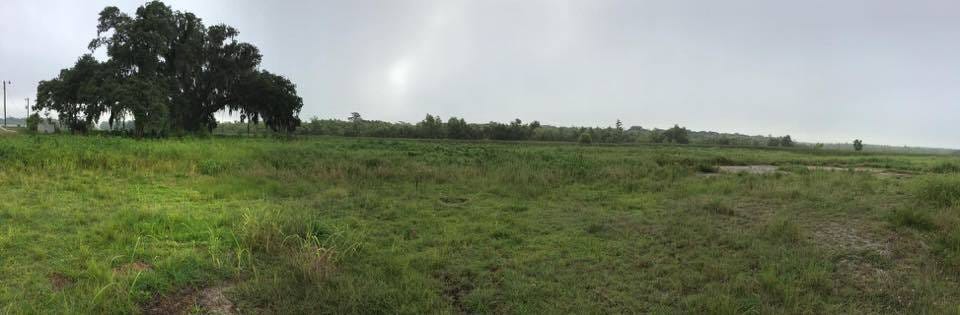
After taking the picture, I approached the tree and realized it was actually three trees, closely bunched together that from a distance looked like one tree. Like my reflections of the image and my memories, the three trees melded, in my mind, to form one, and as I changed my view and perspective, they broke apart to form three. My thoughts on the image morphed. Instead of seeing a solitary tree, standing alone in a field, I saw a community together, resolute amidst the desolation. I saw a community akin to those that Gaines writes about. I saw a community like my own family. I saw strength in numbers and comfort in numbers and resilience in numbers.
We don’t need to remember things exactly as they happened. If we did, the emotional appeal of our memories would disappear. They’d become like reading a textbook, a rescitation of facts and figures without the “psychic colors” that give them life. I’d rather be present, in the moment, gazing at the field where the solitary tree stands upward towards the sky, examining it up close and seeing it turn into three trees, instead of recalling the specific details of that moment. I’d rather belt out the lyrics of “In Circles” or “Seven” as I watch Sunny Day Real Estate instead of staying attached to my phone. I’d rather the “psychic colors” create on the canvas that memory that tells me about myself and that I can look at and feel that feeling again and again.
What are your thoughts? As usual, let me know in the comments below, and make sure to follow me on Twitter at @silaslapham.
 Interminable Rambling