
A couple of years ago, I proposed a study travel trip to Poland focused on the intersections between Jim Crow and the Holocaust. Unfortunately, the trip didn’t make, so we didn’t get to go. However, one student wanted to take the course, and we did a directed study which led to a co-written essay. I have thought about trying to get this trip make again, but I didn’t really want to do one for next year. However, two things changed my mind. First and foremost, a colelague asked me if I’d be interested in a trip to Poland, and the other occurred in a course I taught this semester. In my graphic memoir class, students had to create their own graphic text as their final assignment. The text had to focus on an historical event, and since we did a couple of books about World War II, one group chose the Warsaw Ghetto because they had never heard about the ghettos. With these things in mind, I constructed a syllabus for a study travel trip focused on resistance and survival during World War II, centering in on the Warsaw Ghetto Uprising, the Warsaw Uprising, and Auschwitz. Below, you will find the preliminary syllabus for the course.
Course Overview
When we in the United States think about World War II, we usually think about a handful of events, typically ones that provide heroic details about how we fought to defeat Nazism. We think about D-Day. We think about the liberation of Paris. We think about the Battle of the Bulge. We think about the march to Berlin. We study the Holocaust, the end result of the Final Solution that led to the murder of 6,000,0000 Jews. If we include Soviet POWs, Romani, individuals with disabilities, gay men, political prisoners, and more, then the number of individuals the Nazis systematically murdered rises to over 11,000,000. If we include civilian deaths during the war, the number tops 30,000,0000.
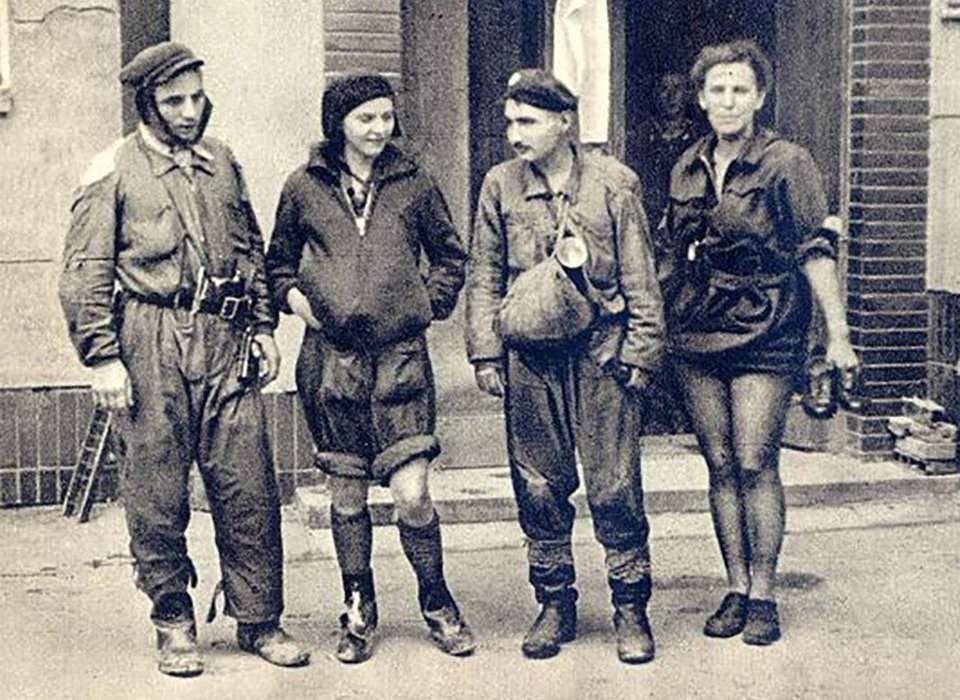
We know the outcomes of the Final Solution and the war. We know the end result, but we fail, many times, to see what preceded the rail cars packs with human beings, the gas chambers, the firing squads, and the mass graves. We fail to see the systemic lead up to those acts. We fail to see the resistance at every stage that sought to defeat the Nazi war machine and to stave off the genocide of millions. We may read a memoir about someone’s time in Auschwitz, but we don’t read about someone like Miron Białoszewski who lived through the war in Warsaw, studying in an underground school during the Nazi occupation, and who participated in the Warsaw Uprising in 1944. Of the early days of the war, Białoszewski writes, “I was seventeen years old when I went to bed one day and for the first time in my life heard artillery fire. It was the front. And that was probably September 2, 1939. I was right to be terrified. Five years later the all too familiar Germans were still walking along the streets in their uniforms.”
We fail to learn about the ghettos that the Nazis erected in places like Warsaw, where they kept 460,000 Jews in a 1.3 sq mile space before liquidating it and sending them to places like Treblinka and Majdanek. We fail to learn about the Warsaw Ghetto Uprising in 1943 when Jews resisted Nazi liquidation of the ghetto. Simha Roetm writes that “[i]n the first three days [of the uprising], the Germans didn’t take a single Jew out of the buildings. After their attempts to penetrate the Ghetto had failed, they decided to spare themselves casualties by destroying it from outside with cannon and aerial bombings.” When they destroyed the Ghetto, Roetem states, “The ‘streets’ were nothing but rows of smoldering ruins. It was hard to cross them without stepping on charred bodies.”
Most of us may be familiar with accounts of survivors of camps such as Auschwitz. We know about Art Spiegelman’s Maus, Miklos Nyiszli’s Auscwitz: A Doctor’s Eyewitness Account, or other accounts from survivors. We are not, necessarily, familiar with József Debreczeni’s Cold Crematorium: Reporting from the Land of Auschwitz which originally appeared in Yugoslavia in 1950 but remained unknown in the United States until its publication in English in 2023. On Debreczeni’s account, Jonathan Freedland notes that “the Germans are mostly out of view and off stage; they are the ultimate authorities, the masters of the camp, but their will is done by others.” Debreczeni highlights the ways that German companies benefitted from the Final Solution and camps such as Auschwitz. He highlights the internal workings of the camps and how individuals turned on one another for survival. He details the environmental conditions of the camp, showing the ways that these conditions exacerbated and led to health problems and death.
We know this part of the story, the mechanized murder of millions of individuals. We do not necessarily know the aftermath, the rebuilding of Poland and Warsaw following the war. Jérémie Dres details some of this in his graphic memoir We Won’t See Auschwitz which traces his and his brother’s trip to Poland remember the past and to see how Poland still wrestles with the memories of the Holocaust and the war. Notably, Dres and his brother choose not to go to Auschwitz. They choose not to go to the site where their ancestors were murdered. Instead, they focus on the cultural revitalization and the continuing struggles of Jews in Poland. The aftermath, just like the lead up, is important for us to remember and think about as we work to understand the ways that individuals can participate in such atrocities.
In this course, we will read memoirs by Simha Rotem a participant in the Warsaw Ghetto Uprising; Miron Białoszewski a participant in the Warsaw Uprising; József Debreczeni who survived a concentration camp; and Jérémie Dres who sought to understand his family’s history and the present. We will go where they went. We will visit the remnants of the Warsaw Ghetto, going to the Warsaw Ghetto Musuem. We will go to the Warsaw Uprising Museum and visit Pawiak Prison, a site where the Gestapo held individuals before shipping them off to concentration and death camps. We will visit the remnants of Treblinka, where 900,000 Jews were murdered and which the Nazis destroyed in retreat. We will visit Auschwitz, where the Nazis murdered 1,000,000 Jews. We will read memoirs by individuals who inhabited and survived these spaces. We will explore acts of resistance and the ways that atrocities like this happen.
Primary Texts:
Białoszewski, Miron. A Memoir of the Warsaw Uprising.
Debreczeni, József. Cold Crematorium: Reporting from the Land of Auschwitz.
Dres, Jérémie. We Won’t See Auschwitz.
Roetm, Simha. Memoirs of a Warsaw Ghetto Fighter: The Past Within Me.
 Interminable Rambling