
William Gardner Smith’s The Stone Face, as I have written about over the past few posts, revolves around the tension that Simeon feels about living in Paris as the Civil Rights Movement occurs back in the United States. Simeon’s conflict arose partly from Smith’s own experiences as an expatriate in France but also from the experiences of other African America expatriate writes in France such as Richard Wright and James Baldwin. In “Alas, Poor Richard,” Baldwin directly addresses this tension following the death of Wright. After an African man joked with Baldwin and said that Wright viewed himself as a white man, Baldwin began to think about the comment. Baldwin comments that Paris allowed Wright to live in Paris “exactly as he would have lived, had he been a white man, here, in America.”
Paris provided Wright a refuge from the racism and oppression they encountered in the United States, but Baldwin questions what Wright ultimately gave up for that “safety and comfort.” Baldwin concludes that the price Wright paid for this “illusion of safety” was “a turning away from, ignorance of, all of the powers of darkness.” The illusory comfort of France provides a shield from having to look, if one chose not to, back at the United States as well as France’s ongoing racism. This is the tension Simeon feels in The Stone Face. He chooses to confront “the powers of darkness” by heading back to the United States at the conclusion of the novel.
As I have noted over the course of the pervious posts, Simeon’s move from the illusion of safety to activist occurs through his interactions with Ahmed and Hossein. Baldwin’s comment about Wright addresses this similar issue, and Adam Shatz states that those who chose to ignore France’s racism against the Algerians become “passive bystanders, clinging to the inclusion they’ve been denied at home. The Stone Face is an anti-racist novel about identity, but also a subtle and humane critique of a politics that is based narrowly on identity.”
During his time with Ahmed, Hossein, and others in Hossein’s apartment, Simeon things about the systemic racism that impacts him and others around the world. He looks at the men and notices their whiteness, but he continues to think about what he has learned over the past few days, that whiteness does not merely refer to a phenotype. It refers to a system that works to oppress those at the bottom. Simeon sees that “[t]he world was a pyramid, and at the apex were the great rich peoples — the Northern Europeans, the English, and recently the Americans. They imposed their sliding scale on the rest of the world.” Whiteness arose, as Achille Mbembe notes, as “a fantasy produced by the European imagination, one that the West has worked hard to naturalize and universalize.”
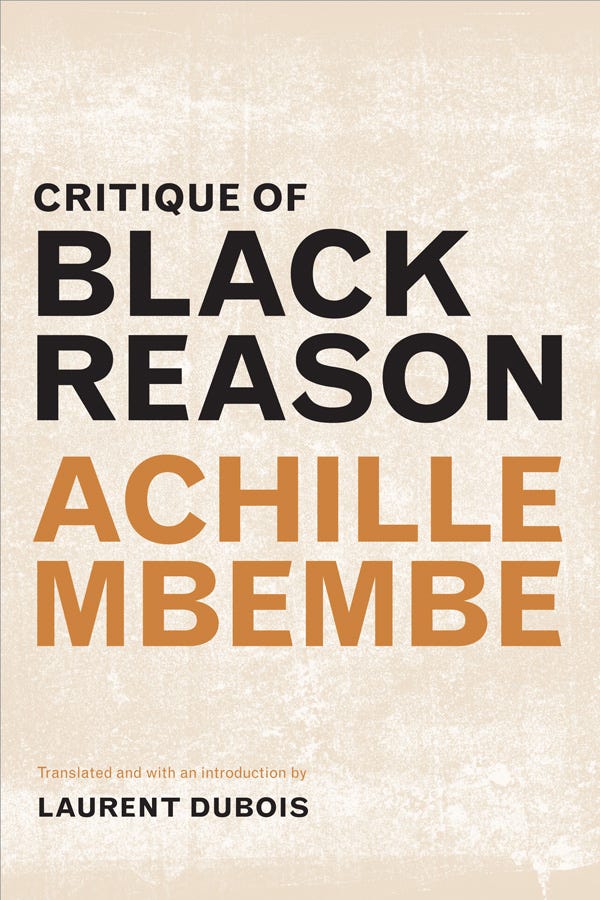
The growth of whiteness, stemming from “the European imagination” has at its core the thirst for power and as Martin Lund points out “whiteness is a racial formation that functions as a system of social control.” Simeon hits on all of this because he points out the origins of whiteness in Europe and the United States and then thinks about the ways that whiteness acts not solely as a phenotype but as a system of social control. By “imposing their sliding scale” on the entire world, they constructed racial hierarchies revolving around systems of power and capitalistic exploitation. Simeon thinks, “Here, the black man was inferior; there the Arab, there the Jew, there the Asiatic — according to where you were. And the people who became rich and great through historical accident were those who ruled.”
Whiteness and business go hand in hand. This fact comes up early in the novel, as I’ve shown, when Babe, Simeon, and some women sit in a cafe and drink. As they sit there, a group of four white American businessmen enter and start to converse with Babe, getting angry and agitated at Babe for not “knowing his place.” The owner asks the men to leave, and they become irate because in the United States they would have the power. They believe that their money, their social standing within the system, provide them the privilege over Babe and Simeon; however, the cafe owner flips the table and kicks the white men out.
A similar scene occurs in Claude McKay’s Banjo: A Story Without a Plot when Ray, Banjo, and others go out for a night on the town. At one bar, Ray goes in to see about a table, but the waiter tells him that American and British sailors are in town and that there may be problems because an incident between a white man and. Black man at the bar caused it to close down for six months, so Ray leaves and tells the men they need to find another place. Money sits at the top, as Ray points out, and he tells the others that legislation and decrees won’t stop such treatment “so long as the pound is lord and the dollar is king and the white man exalts business above humanity. ‘Business first by all and any means!’ That is the slogan of the white man’s world.”
Money and profits, more than fellow human beings, matter. This is what we see from the white men in The Stone Face because they expect their money to buy them privilege. They encounter a shock, though, when the owner ignores the hierarchical pyramid of race and kicks them out. However, can we really say, in this instance, that the owner privileges humanity over money? I’d probably say, “No.” The reason for this answer is because Babe frequented the cafe, and he provided business to the cafe, so why would the owner choose to loose steady business for four white men? That does not mean the owner does not privilege humanity, but we must consider this fact within the euqation.
Simeon sees, as Ray does in Banjo, the capitalistic systems at work in maintaining “social control” through prejudice and fear. The pyramid has a small top of wealthy individuals supported by the base that they oppress. The exalt business and money over humanity and people. Simeon initially exalts the illusion of safety that his position of privilege provides him, but his views change as he experiences and sees more of what occurs in France and looks back to the United States. In the next post, I will finish up this discussion by looking at Simeon’s ultimate decision to return to the United States and become involved in the Civil Rights Movement.
Until then, what are your thoughts? As always, let me know in the comments below. Make sure to follow me on Twitter @silaslapham.
 Interminable Rambling