
I don’t remember the first time I heard Regan Youth’s “Jesus Was A Communist” (also titled “Jesus Was A Pacifist”), but I remember the impact it has had on me. On the song, Dave Rubinstein sings, over and over again for four verses, “Jesus was a communist/Jesus was a pacifist/Jesus was a communist/Jesus didn’t like the rich.” Reagan Youth pointed out the intersections between Christianity and politics that arose during the Moral Majority and its impact on society. “Jesus Was A Communist” addresses these intersections, pointing out the ways that individuals such as Jerry Falwell rejected Jimmy Carter, a Southern Baptist Christian, and embraced Ronald Reagan. In fact, Carter was, as the authors of the textbook America’s Providential History put it, “an example of a Christian whose mind was unrenewed by Scripture and thus reasoned and governed from a ‘humanistic’ worldview.”
While I do not adhere to labeling Jesus with a political ideology, especially since the political ideologies we have today did not exist during his lifetime, Regan Youth’s point bears noting, especially since they did not originate it. Lillian Smith details, in multiple works, the ways that Christianity distorts the words and teaching of Jesus, and how, even when faced with Jesus’ words and ideas, professing Christians deny them in preference of segregation, oppression, xenophobia, and hate.
Smith, from the outset, was clear that her debut novel Strange Fruit (1944) explored the oppressive nature of Christianity on individuals and how some used Christianity as a means of control. In a letter to Walter White in 1942, she told him, “It is an indictment of the church in the South and I imagine the thesis is fairly apparent that the author doesn’t think it is possible for a white person to be a Christian in the South; and hard for Negroes to be.” I’ve written about this some before, but today I want to expand on it, looking at some moments from Smith’s novel in relation to her memoir Killers of the Dream.
Sitting in his parents’ drug store, Tracy Deen and his friends talk about Brother Dunwoodie’s revival in Maxwell. Harriet calls it “a debauch,” even as she recalls the fears she had “of death and punishment.” She even asks, “Why can’t [preachers] talk a little about the way to live?” To this question, Prentiss Reid, the editor of the Maxwell Press, looks at Harriet and tells her she has it all wrong. “What they want you to do,” he says, “is sponsor religion, not practice it.” He continues, telling her, “Don’t let your conscience mix you up. If you practiced the teachings of that man Jesus here in Maxwell, we’d think you were crazy — or communist.”
Even when someone knew what Jesus taught and what he said about loving others as one loves themselves, they had difficulty in adhering to his tenants. In Killers of the Dream, Smith details an interracial meal where a white woman, knowing in her conscience that eating with Black women was right, “she was seized with by an acute nausea” because culture, specifically her upbringing, education, and the church, taught her that eating a meal with Black women was wrong. Facing this tradition, the women at the gathering, and others like it, placed weight on Jesus and his example, proclaiming, “Jesus would have done likewise,” and he did when he ate and communed with the despised and outcasts.
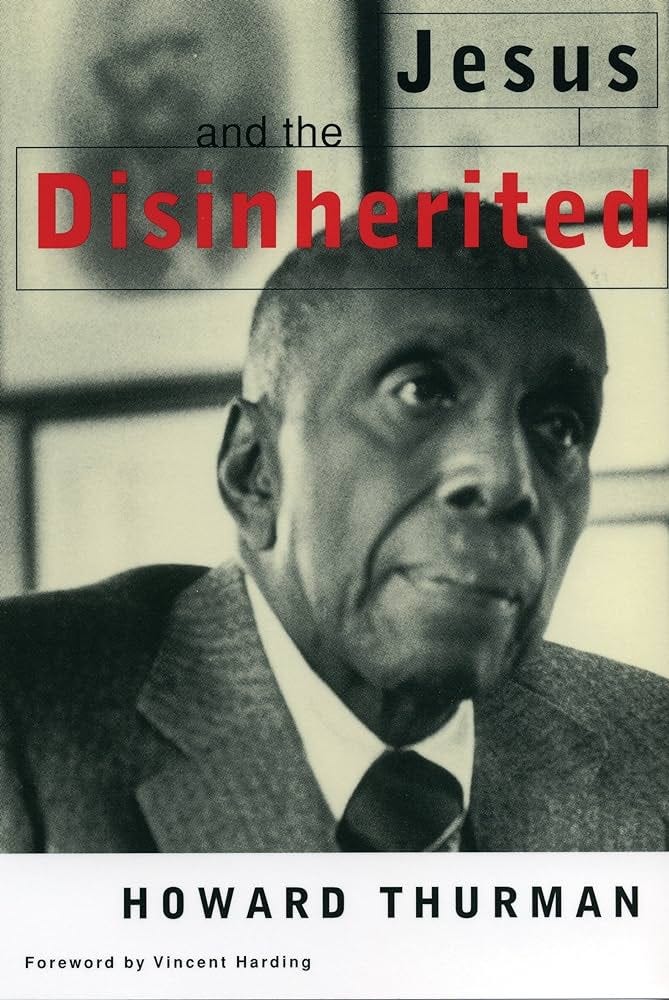
While the women knew how Jesus would act, others, as Prentiss Reid points out, would condemn the women’s actions as unchristian or even communist for attempting any form of equality between them. Discussing the woman brought before Jesus after being caught in the act of adultery, Howard Thurman, in Jesus and the Disinherited, points out that to the crowd seeking to stone her “the woman was not a woman, or even a person, but an adulteress., stripped of her essential dignity and worth.” They saw her as something outside of themselves, disassociated from themselves. Smith points out that through its upholding of segregation, the white church did the same to Blacks, dehumanizing and ostracizing them.
Smith describes how the church becomes the mouthpiece for Mr. Rich White, a pulpit from whence racism and hatred spew in order to maintain wealth, power, and prestige. When Mr. Poor White began to think about his situation and start to collaborate with Blacks and other individuals, Mr. Rich White would place the blame on “outside agitators,” notably the “damyankee” and any pastor that would “keep talking about Christian brotherhood.” The latter led Mr. Poor White to think “about money and wages and jobs” and having a life free from worry and oppression. Mr. Rich White couldn’t have that because those ideas messed with his money, and he deployed the church, along with the schools, newspapers, and other entities, to squash such thoughts.
To appease Mr. Poor White, Mr. Rich White would allow for lynchings, the murder of Black individuals who they painted as the Other, the individuals to fear who kept Mr. Poor White down. When a lynching took place, at the hands of Mr. Poor White, “the rich white protected him in court; the preacher protected him in the church; the policemen looked away, the sheriff was easily intimidated, the juries rarely convicted, and the newspapers were ‘reasonable.’” The levers of power and persuasion said nothing and condoned the murder, justifying it in the eyes of Mr. Poor White.
Smith points out, in Killers of the Dream, the way power works to suppress, and in Strange Fruit, she points out the generational legacies of power that allow systems like this to continue. Throughout the novel, Tracy’s mother wants her son to attend Brother Dunwoodie’s revival and go to the altar. She legitimately appears to fear for his soul, but others see Tracy as a tool, as a means of maintaining power and acquiring more. The church becomes weaponized in this manner to place Tracy into the legislature.
After Tracy tells Dunwoodie about his relaitionship with Nonnie, Dunwoodie tells him to have Nonnie but to also settle down with Dorothy Pusey, his white neighbor, so he will be respectable. As he gets out of the car, Dunwoodie looks at Tracy and tells him, “There’s a of important folks on your side.” Dunwoodie lays out that powerful people want Tracy to succeed and rise in the halls of power. In fact, when L.D. Stephenson asks Tut Deen to perform an abortion for his daughter and Tut refuses, L.D. tells his friend, “We’d do things for Tracy. Put him in the legislature.” Even Nat Ashley, the white boy who tried to rape six-year-old Nonnie, rose and maintained power by becoming “mayor of some town up in North Carolina” with plans to run for governor.
Dunwoodie profited off of those who sought to “convert.” At the revival, he sat down with Tom Harris to “make a list of Maxwell’s important men,” including Cap’n Rusthon and L.D. Stephenson, who Tom said may well be governor one day. Each of these men see the church as a political tool, a mechanism to achieve and maintain power, not to save souls. Anyone who espouses the beatitudes or care for the impoverished or oppressed would not succeed. Instead, they would get labeled “Communist,” even as they argue for policies that would benefit everyone.
As Smith points out in Killers of the Dream, “It is equally hard for the rural white to believe that the southern liberals who champion their right are not ‘Communists.’” The epithet becomes a weapon, a term laced with negative connotations, to disparage any thought of equal benefits and security. If a Christian fights for “higher wages,” against “demagogurery,” “human rights,” in opposition of war, and for “freedom of conscience and speech,” they get labeled “Communist.”
All of this reminds me of something Russell Moore said when he talked about the reactions pastors got from their congregations when they quoted Jesus’ words in the Sermon on the Mount (Matthew 5–7), even parenthetically. After the service, the pastors said that congregants would approach them and ask, “Where did you get those liberal talking points?” When the pastor would say the words came from Jesus, the congregant would respond, “Yes, but that doesn’t work anymore. That’s weak.” Even the words of Jesus become anathema to the congregant and while the congregant may not label the pastor as “Communist,” they think about the pastor as “woke” or “progressive” or “liberal,” more demagogic fearmongering words spewed to keep one from examining themselves.
As Heather Cox Richardson writes in Democracy Awakening about how individuals fall for authoritarians, “Turning against the leader who inspired such behavior would mean admitting they had been wrong & that they, not their enemies, are evil. This, they cannot do.” Facing Jesus’ words would cause the same reaction, forcing individuals to confront their own sin. If this is mission of Christianity, that shouldn’t be a problem, but we know that people fear what they become and refuse to accept themselves as they truly are, thus they reject what they proclaim to love and worship in order to make themselves feel better about their evil.
 Interminable Rambling