
As I prepared to teach my study travel course on identity in Belfast and before I arrived, I had a preconceived notion, of course, about the places I would visit and what I would encounter. Most of these impressions, apart from the things that my daughter told me about her time in Belfast, came from either academics, novelists, or popular culture, music being a big part of that discussion. Music serves as a voice of the culture and a means of fighting back against oppressive system, a weapon of sorts, in lieu of guns and bombs, to sway public and international opinion. Couple with this, the ways that music and popular culture transcend borders both amplifies the artists’ positions and voices, but it also obfuscates the overall message because much of the context gets lost in translation, even if the artist and listener share a common language.
Before preparing for this course, I would not have completely understood songs like The Dubliners’ “The Town I Loved So Well” or Stiff Little Fingers’ “Alternative Ulster.” However, the more I read and watched, the better I came to understand those songs within the broader context of when they originally appeared, and, especially after visiting specific sites such as Divis Towers, Falls Road, the Shankill, and Derry, I gained a new perspective on these songs, as well as songs such as U2’s “Sunday Bloody Sunday” or even songs that I only learned about while on the trip such as the country protest song “Jesus and Jesse James,’ a song that, as John Conroy writes in Belfast Diary, “tells of the Savior and the bandit riding through Belfast” while they each look upon the burned building and barbed wire barriers.
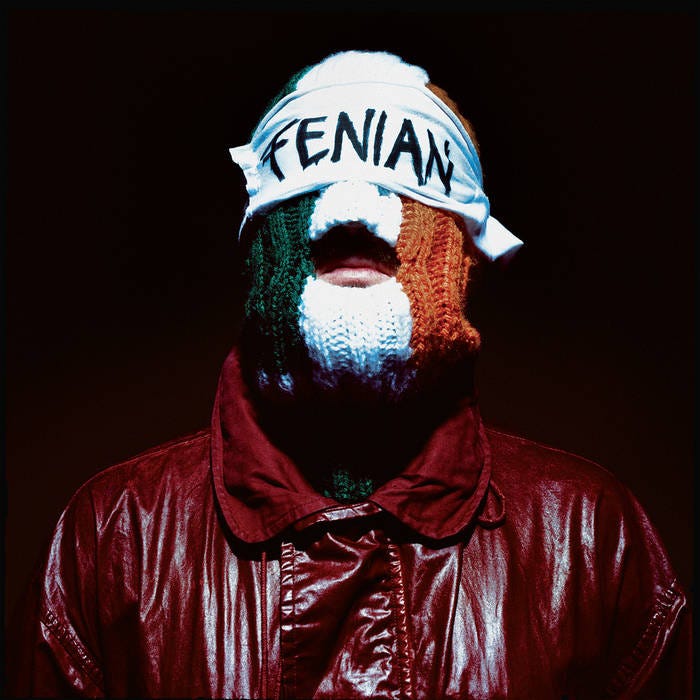
All of this, specifically reading Conroy’s Belfast Diary and going on a tour of Falls Road and Shankill Road with a republican and a loyalist respectively, has helped me to understand more of Kneecap’s recent work, notably their latest album Fenian and songs such as “Occupied 6,” “An Ra,” and other songs. When I first really started listening to Kneecap, really in preparation for this trip, I did it from a removed perspective, thinking about the ways that they rap in Irish as well as English, proclaiming their nationalists identities and using music as a way to voice their ideological perspectives both within the regional context of Belfast and Northern Ireland but also in relation to global contexts such as the genocide in Gaza. However, the more I have learned, I see more of the context within all of this, even though I am still far removed from the actual lived experience and history of the conflict.
At one point during our trip, I had a conversation with someone about Kneecap, and a lot stood out to me from this conversation. Most notably the person pointed out the group’s misogyny, specifically in the film, and in other areas. This did not shock me in any way, especially because I understand all of this and the ways that music and hip hop still rely on misogyny in their public personas. As well, we talked about the fact that Kneecap, as all artists do, create a persona that serves as the face, the image that people, no matter where in the world, see and latch on to or revolt against. The image and the people do not necessarily meet, but the lines, over time, become very, very blurred, blending the image into the individual and vice versa to the point where people can no longer tell the difference where one begins and the other ends.
However, what really stood out to me during my conversation about Kneecap was the person’s comment that the group, and others of the same generation, a generation that came of age after the Good Friday Agreement in 1998, romanticizes the past and the stories of those who fought and endured the Troubles. The individuals appear to relish in the narratives of the past, the “heroic” stories of martyrs and the “evil” of the oppressors. Just walking around West Belfast and East Belfast we see this in the murals painted on the sides of buildings, murals that remember the victims of the violence and also, through that remembrance, create a villain out of the other side, individuals who may have had nothing to do with any of the violence and only strove to survive amidst all of the violence. This generational repetition causes the wounds to remain open don’t completely heal, thus keeping the tensions alive with the community.
The romanticization of the past led me to think about the romanticization of gang life in gangsta rap or other forms of romanticization in music such as the outlaw in country music or the anarchist in punk or on and on and on. The image becomes the person and the person becomes the image, having to live up to that romanticized image. Yet, the context for Kneecap really strikes me as interesting because one cannot separate the past, the communities one inhabits, from these identities. Growing up amidst the contested identities and spaces, ones that have both been traumatized by the past and look to the past for inspiration, causes one’s existence to form around it. It reminds me, in some ways, of the way we romanticized war, and even still romanticize war, as a patriotic endeavor that individuals must experience to become part of the collective identity of a society and to feel connected to it.
The ways that the republican and the nationalist communities carry on the past has become something I am very much interested in delving into more in relation to the murals and language that have encountered during the trip. I am interested in the ways that individuals, who grow up with skewed historical perspectives that leave out certain events and craft certain narratives, exist within the same space, a mere street of two apart from another. I am interested in how these students who, from primary school to the end of high school never interact with someone from the other side of the Peace Wall, come to interact with another once they enter university, a university less than two miles from where they grew up. Ultimately, I am interested in the public narratives and sites of public memory that I encountered during my time in Northern Ireland, and this is what I will write about in my next post, so stay tuned.
What are some of your thoughts? As usual, let me know in the comments below. Make sure to follow me on Bluesky @silaslapham.bsky.social.

