Category: nazi

+

You Can Never be Apolitical

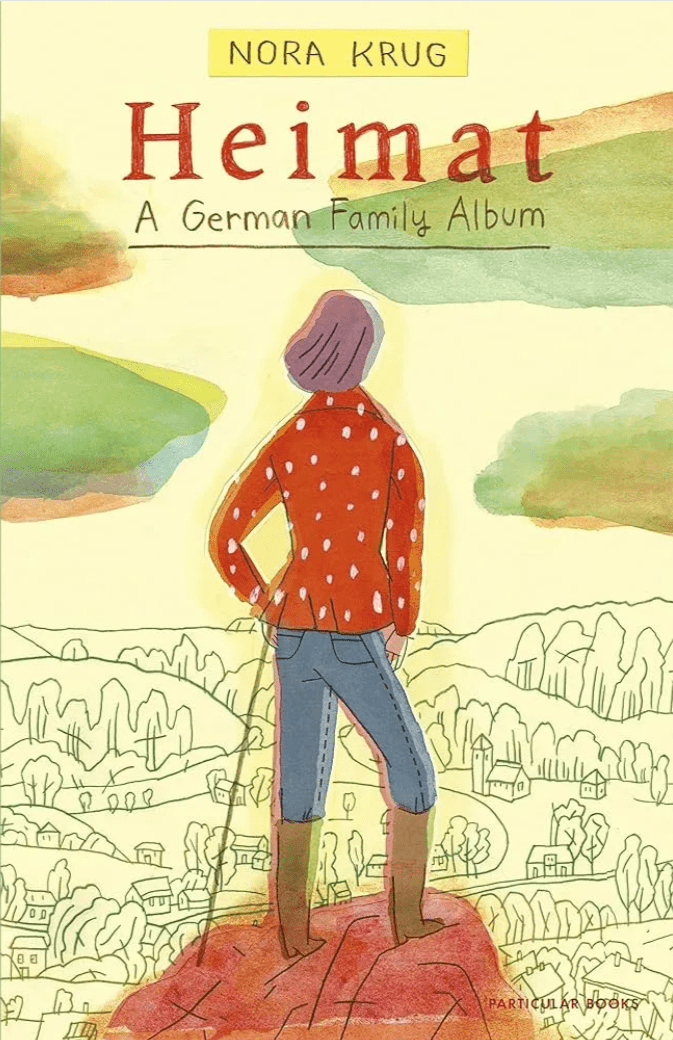
In Belonging: A German Reckons with History and Home, Nora Krug traces her family’s history and digs deep into the role her family members played during World War II, specifically asking if they were active participants in the violence that the Nazis enacted on others. She grapples with her uncle Frank-Karl’s involvement and the ideologies he imbibed from a young age, as part of the … Read More You Can Never be Apolitical

+

“We’d find it hard to have enemies if we cared about what happened to them”: How the Construction of “Enemies” Harms Us All

Fear arises not just through a lack of action but also through, as Lillian Smith puts it, “the singsong voices of politicians who preached their demonic suggestions to us as if elected by Satan to do so.” The creation of an enemy, of an other, outside of ourselves, someone we look down upon as “uncivilized,” “unintelligent,” “inferior,” or “”bestial,” serves as a weaponization of … Read More “We’d find it hard to have enemies if we cared about what happened to them”: How the Construction of “Enemies” Harms Us All

The Transmission of Hate in Anna Segher’s “The Seventh Cross”

While the normality of life amidst the tyranny of fascism caught my attention in Anna Seghers’ novels, I also noticed how Seghers, in The Seventh Cross, details the ways that youth become indoctrinated into fascism and oppressive political ideologies. There are multiple scenes in The Seventh Cross that involve the Hitler Youth or young men joining the SA and SS, specifically George Heisler’s younger brother Heini.  Early during his … Read More The Transmission of Hate in Anna Segher’s “The Seventh Cross”

The Importance of Critically Engaging with Language

Growing up, I’d be riding with someone and as we drove through a parking lot, the person may look at a Cadillac or a car that was not parked correctly and say, “Gotta be a Democrat.” Or, while waiting in line somewhere, a person might say, “Look at that Canadian acting like that.” In each of these cases, the speaker attempted to code their … Read More The Importance of Critically Engaging with Language

+

Who do you want to be?

As World War II progressed, concentration camps such as Dachau, which opened in March 1933 and could accommodate 5,000 people, ballooned in size and no one could escape the atrocities perpetrated by the Nazis. By the end of the war, when the Americans liberated Dachau in 1945, Konnilyn Feig points out the camp held 30,000 prisoners, six times what it could accommodate, and “8,000 unburied corpses.” … Read More Who do you want to be?