
Year: 2019

+

I’m the Victim of America’s Sin. I’m What Sin Is.

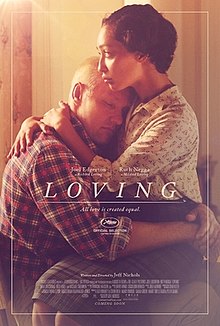
Over the last couple of posts, I have written about Jeff Nichols’ Loving and the legal constructions of race. Today, I want to conclude that discussion by looking some at Jean Toomer’s Cane (1923) and Ernest J. Gaines’ The Autobiography of Miss Jane Pittman (1971). In each of these texts, published close to fifty years apart, Toomer and Gaines highlight the ways that words … Read More I’m the Victim of America’s Sin. I’m What Sin Is.
+

“Made in America”: History and Jeff Nichols’ “Loving”

Last Thursday, I wrote about children and home in Jeff Nichols’ Loving (2016). Today, I want to continue that conversation by focusing on one image from the film. Unfortunately, I do not have a picture of the scene because I could screen capture it. However, I will describe the pertinent parts of it below.

+

Children and Home in Jeff Nichols’ “Loving”

Recently, I had the opportunity to speak at the Universités de Tours on Loving v Virginia (1967) in relation Ernest J. Gaines’ Of Love and Dust (1967) and Frank Yerby’s Speak Now (1969). Before my lecture, we watched Jeff Nichols’ Loving (2016). This was the second time I had seen the movie in about a two-week period, so I was intently focused on various … Read More Children and Home in Jeff Nichols’ “Loving”

+

Language in Ernest Hemingway’s “The Battler”

Last post, I wrote about the ways that Ernest Hemingway highlights the ways that language constructs race in his story “The Doctor and the Doctor’s Wife.” There, I examined the ways that Dick Boulton and Henry Adams describe the logs that they pull out of the sand. Are they “stolen” or free for the taking. While Hemingway zeroes in on the ways that Boulton … Read More Language in Ernest Hemingway’s “The Battler”

+

Language in Ernest Hemingway’s “The Doctor and the Doctor’s Wife”

Writing about the connections between Jean Toomer’s Cane and Ernest Hemingway’s In Our Time, Margaret Wright-Cleveland argues that both texts examine social constructions of race. Specifically, she notes that Hemingway’s text “makes clear that both whiteness and blackness are racial constructions.” As such, both Toomer and Hemingway position “race as a formative idea for American modernism.” Today, I want to look at the ways … Read More Language in Ernest Hemingway’s “The Doctor and the Doctor’s Wife”