Category: american literature

+

Banned Books Week: Ashley Hope Pérez’s “Out of Darkness”

October 1–7, 2023, is Banned Books Week, a week that “was launched in 1982 in response to a sudden surge in the number of challenges to books in libraries, bookstores, and schools.” Last year, Ashley Hope Pérez’s Out of Darkness was the 9th most challenged book. Out of Darkness debuted in 2015, and it went seven years without a ban or challenge. However, amidst … Read More Banned Books Week: Ashley Hope Pérez’s “Out of Darkness”

+

Classics & Coffee: Making a Literature Podcast with My Daughter

During the summer, my daughter, Juliette, and I started seriously talking about doing a podcast. This conversation started earlier, but we really started working on it around June. What arose from those conversations was Classics & Coffee, a podcast where we would talk about books while drinking coffee. This format seemed obvious to us since both of us read extensively. I, of course, read … Read More Classics & Coffee: Making a Literature Podcast with My Daughter

+

Seeds and Growth in Toni Morrison’s “The Bluest Eye”

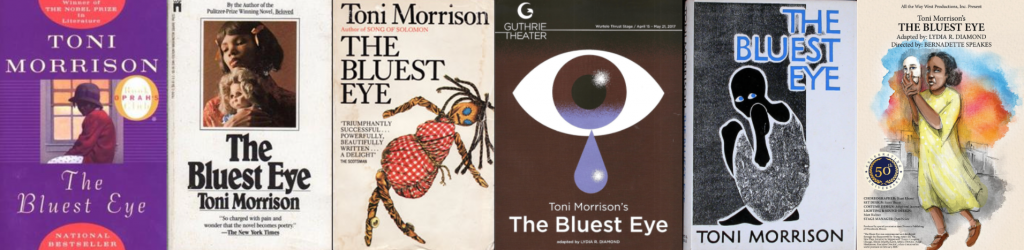
On her first novel, The Bluest Eye, Toni Morrison states that she wanted to explore the “tragic and disabling consequences of accepting rejection as legitimate, as self-evident.” While some become dangerous and violent, “reproducing the enemy who has humiliated them over and over,” others become invisible, melting away as they “collapse, silently, anonymously, with no voice to express or acknowledge” the impact of rejection. Through … Read More Seeds and Growth in Toni Morrison’s “The Bluest Eye”

+

Rhetorical Intersections in Early America

Currently, I’m reading David F. Walker, Damon Smyth, and Marissa Louise’s graphic narrative of The Life of Frederick Douglass based on Douglass’ autobiographies. There are a few things from this graphic novel that I plan to write about in the near future; however, as I read it, the above panel stood out. In this panel, Douglass discusses the similarities between systems of oppression that … Read More Rhetorical Intersections in Early America

+

Art Serves as Reflection of Ourselves

What is the role of art in society? During the Harlem Renaissance, luminaries such as W.E.B DuBois argued that all art should serve as propaganda and should stem from classical traditions whereas others such as Langston Hughes sought to make art of and about the people, eschewing the position that art should be “lofty.” Throughout A Long Way from Home, Claude McKay addresses this … Read More Art Serves as Reflection of Ourselves