Category: george takei

+

We Cannot Keep the Shades Pulled Down and Claim Ignorance at Atrocities Surrounding Us

As a result of Executive Order 9066, the United States government abducted George Takei and his family, taking them to a concentration camp in Rohwer, Arkansas. They took a train to Arkansas, and during the trip, whenever they entered a town, the soldiers guarding them on board the train would tell them to shut shades so that no one outside the train, walking through the … Read More We Cannot Keep the Shades Pulled Down and Claim Ignorance at Atrocities Surrounding Us

+

Immortality and Memory

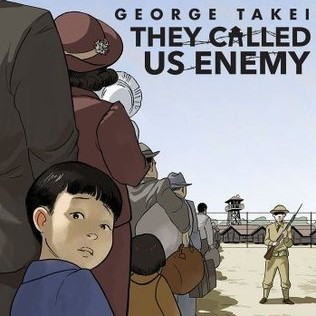
“Memory,” as George Takei puts it in They Called Us Enemy, “is a wily keeper of the past.” It shifts and moves, changing over time. Memory, as well, is the keeper of the past and the means of immortality. It’s the act of remembering that connects us to those whom we have never personally met, not just with people that we tangibly interacted with … Read More Immortality and Memory

+

The Unproportional Distribution of Shame: Part I

Guilt and the acknowledgment of wrongdoing constitute one’s feeling of shame. It arises when someone recognizes their culpability in an event or events and feel regret and sadness at their part in the action. On a recent episode of This American Life, Mohamadou Slahi, a man incarcerated at Guantanamo for years before his release, speaks with some of the individuals who interrogated and tortured … Read More The Unproportional Distribution of Shame: Part I

+

Home in George Takei’s “They Called Us Enemy” & John Okada’s “No-No Boy”

Over the course of George Takei’s They Called Us Enemy, home plays an important thematic role. For Takei and his family, what does home actually mean? They live in an incarceration camp for years, and Takei, the oldest of three children, is only about five or six when they enter they camp. His siblings are younger. So, when the order comes from the camps … Read More Home in George Takei’s “They Called Us Enemy” & John Okada’s “No-No Boy”

+

Emotions in the Gutter: Part II

Last post, I started discussing the separation of illustrations into multiple panels in works such as March and They Called Us Enemy. Today, I want to continue that discussion by looking at some more examples in Takei’s graphic memoir and the ways that Harmony Becker separates larger images into multiple panels to highlight multiple thematic aspects of the narrative, notably the generational trauma that … Read More Emotions in the Gutter: Part II