Category: graphic novels

+

Ontological Expansiveness and Jerry Craft’s “New Kid”

As I was thinking about texts for my Multicultural American Literature class this semester, parents in Katy ISD in Texas tried to ban Jerry Craft’s New Kid and other works from the schools. Last October, Craft was scheduled for a presentation in the district, and Bonnie Anderson, a white parent, started a petition to get the event cancelled. She told NBC News, “It is … Read More Ontological Expansiveness and Jerry Craft’s “New Kid”

Conversation with Kiku Hughes

In my Multicultural American Literature course this semester, I am teaching Kiku Hughes’ Displacement alongside John Okada’s No-No Boy and George Takei’s They Called Us Enemy. Each of these texts focuses on the incarceration of thousands of Japanese and Japanese Americans during World War II, and each of these focuses on the intergenerational trauma of incarceration. The generational effects of trauma run through multiple … Read More Conversation with Kiku Hughes

+

Fascism and the Ku Klux Klan in Bill Campbell and Bizhan Khobabandeh’s “The Day the Klan Came to Town”

As I reread Bill Campbell and Bizhan Khobabandeh’s The Day the Klan Came to Town (2021) recently, my mind kept coming back to another book I have been reading at the moment, Robert O. Paxton’s The Anatomy of Fascism (2005). Campbell and Khodabandeh’s graphic novel tells the story of individuals in Carnegie, PA, standing up against the Ku Klux Klan’s planned march through the borough of Pittsburgh where Jews … Read More Fascism and the Ku Klux Klan in Bill Campbell and Bizhan Khobabandeh’s “The Day the Klan Came to Town”

+

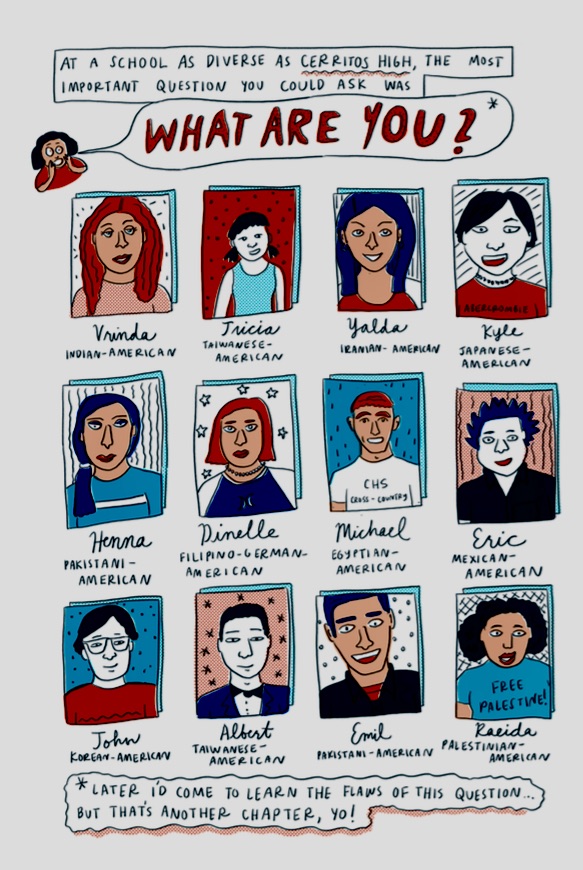
“What are you?”: Part II

Last post, I began looking at the ways that we place individuals into categories, separating them from ourselves, and how this affects the ways that we think about others. Over the next few posts, I want to continue that discussion by focusing on Khadra Shamy in Mohja Kahf’s The Girl in the Tangerine Scarf and the ways that her need to place individuals into … Read More “What are you?”: Part II

+

“What are you?”: Part I

Individuals consistently label others in hopes that they will fit into preconceived constructed categories. The use of these categories helps us navigate the world around us, but these categories also craft differences between individuals. Rather than celebrating these differences, the categories serve, especially to those in power, as a means of severing communities and individuals, causing them to turn on one another out of … Read More “What are you?”: Part I