Category: early american literature

+

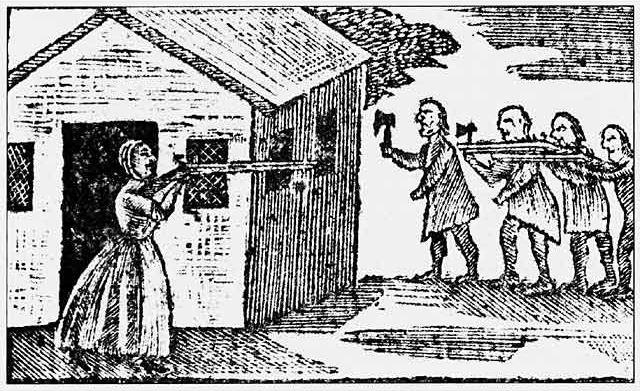
Mary Rowlandson and Louise Erdrich’s “Captivity”

I always enjoy teaching Mary Rowlandson’s Narrative for a myriad of reasons. It presents students with an early example of that distinctly American genre the captivity narrative, it highlights the role of women in colonial America, it illuminates the colonists’ feelings towards Native Americans, and it serves as a text that showcases Puritan thought during the late 1600s. Today, I want to take the … Read More Mary Rowlandson and Louise Erdrich’s “Captivity”


+

African American Literature and the American Dream Syllabus

Whenever I teach an American literature survey course, the topic of the American Dream inevitably comes up. Typically, I ask students to define this mythological term and they reply with the standard answer, “The American Dream means happiness and success.” I elaborate upon this response by pointing them back, first to the Declaration of Independence, then to other texts. The Declaration states that “life, … Read More African American Literature and the American Dream Syllabus

+

Active Learning in the Literature Classroom

Over the past few semesters, I began my early American literature course with Thomas Jefferson. Starting with Jefferson’s Declaration of Independence, Notes from the State of Virginia, and letter to Benjamin Banneker was important considering the recent events in Charlottesville, VA. Typically, I start the first class with David Walker then back track to Jefferson, but after reading Ibram X. Kendi’s “What would Jefferson … Read More Active Learning in the Literature Classroom

+

Charles Chesnutt’s “Dave’s Neckliss” and the Psychological Effects of Slavery

I have written about the ways that texts illuminate the psychological effects of slavery and Jim Crow segregation on both the minds of white and blacks alike. Today, I want to take a moment and look at one of Charles W. Chesnutt’s conjure tales that foregrounds the psychological effects of slavery and Jim Crow from the outset. “Dave’s Neckliss” originally appeared in the Atlantic … Read More Charles Chesnutt’s “Dave’s Neckliss” and the Psychological Effects of Slavery

+

How Can We Listen and Learn from Our Students After Charlottesville?

Last Friday, Marcia Chatelain’s “How Universities Embolden White Nationalists” in the Chronicle of Higher Education. Chatelain begins by talking about the white nationalists who descended upon Charlottesville and how some people see them and just say, “They’re just ignorant!” However, that is not the case. They are college educated, and as Chatelain notes, Richard Spencer went to UVa, Duke, and The University of Chicago. University … Read More How Can We Listen and Learn from Our Students After Charlottesville?