Category: gothic literature

+

Judges 19 and Arnold Friend’s Enigmatic Code

On Tuesday, I wrote about the ways that The Blood Brothers’ “The Salesman, Denver Max” musically fits the tone—the ebbs and flows—of Joyce Carol Oates’ “Where Are You Going, Where Have You Been?” I didn’t expect to add another blog post on this story, but after teaching it, I recalled how much the story warrants multiple examinations. With that in mind, I want to … Read More Judges 19 and Arnold Friend’s Enigmatic Code
The Blood Brothers’ “The Salesman, Denver Max” and Joyce Carol Oates

From the very beginning, Joyce Carol Oates brings music to the forefront of her widely anthologized short story “Where Are You Going, Where Have You Been?” with the dedication that simply reads, “For Bob Dylan” (1003). Other people have written on the ways that Dylan’s “It’s All Over Now, Baby Blue” and “Mr. Tambourine Man” from Bringing It All Back Home (1965) work in … Read More The Blood Brothers’ “The Salesman, Denver Max” and Joyce Carol Oates

+

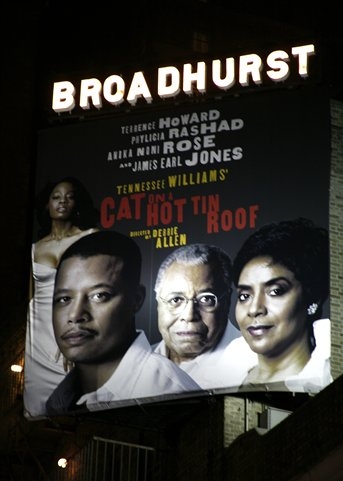
Colorblind Casting and Tennessee Williams’ “Cat on a Hot Tin Roof”

Last post, I wrote about the racial undercurrents that populate Tennessee Williams’ Cat on a Hot Tin Roof (1955). Today, I want to briefly discuss the 2008 Broadway performance of the play with an all black cast starring James Earl Jones, Phyilcia Rashad, Terrence Howard,  Anika Noni Rose, and others. While all of the actors in the Broadway performance are phenomenal across the board, … Read More Colorblind Casting and Tennessee Williams’ “Cat on a Hot Tin Roof”

Music in Flannery O’Connor’s “Revelation”

Last post, I wrote about “When the Roll is Called Up Yonder” in Richard Wright’s “Long Black Song.” Today, I want to look at another song in a short story, this time in Flannery O’Connor’s “Revelation.” The bluegrass, gospel song “You Go to Your Church and I’ll Go to Mine” appears in “Revelation” while Ruby Turpin and her husband Claud sit in the doctor’s … Read More Music in Flannery O’Connor’s “Revelation”

+

Charles Chesnutt and the Plantation Tradition

Last week, I wrote about race in two local stories by George Washington Cable and Kate Chopin. Over the next couple of posts, I want to look at the ways that authors such as Charles Chesnutt and Paul Laurence Dunbar work to counter the plantation tradition and specifically the continued perpetuation of an idealized South during the latter part of the nineteenth century and … Read More Charles Chesnutt and the Plantation Tradition