Category: graphic memoir

+

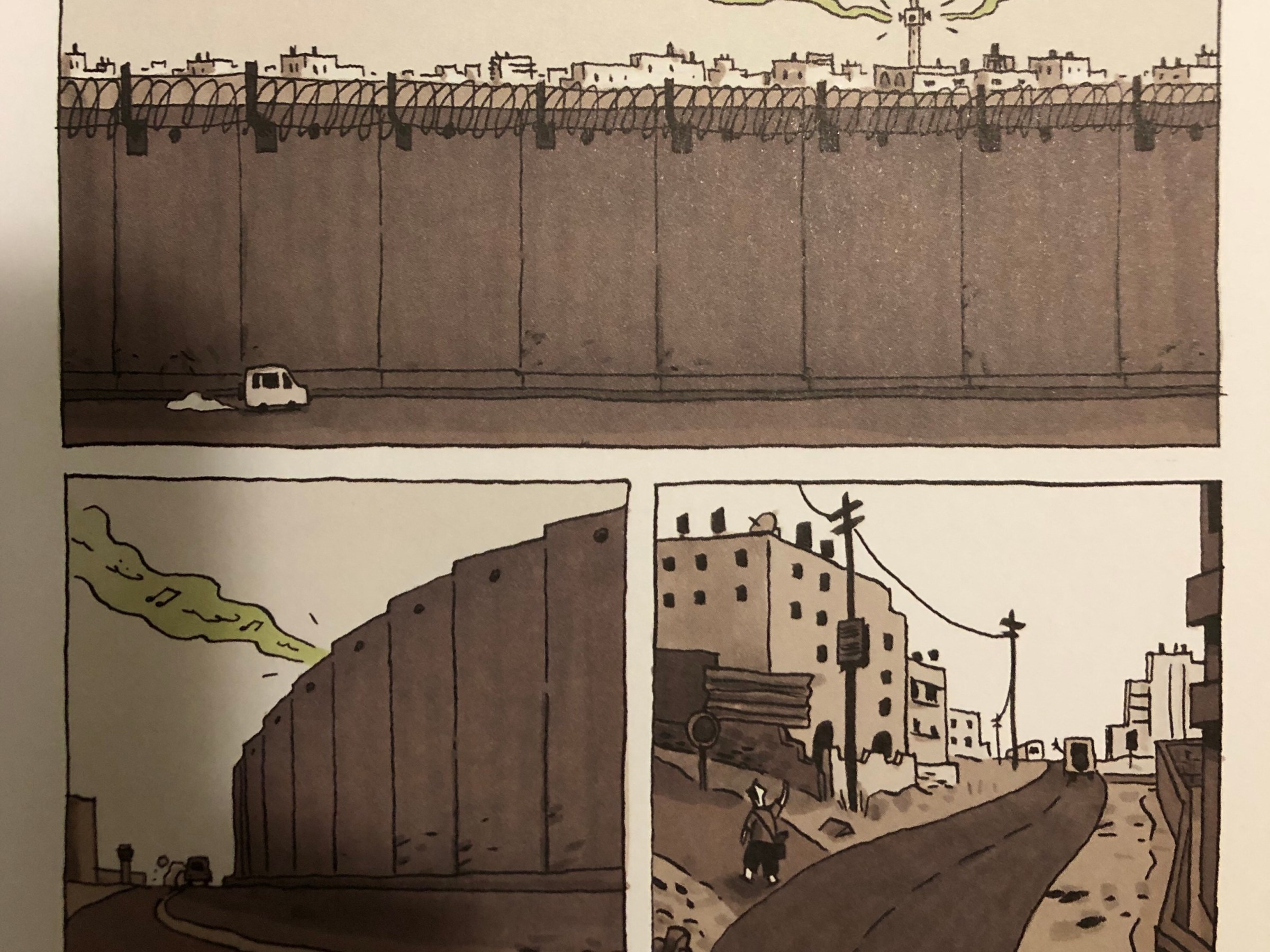
Barriers in Guy Delisle’s “Jerusalem: Chronicles from the Holy City”

Connections lead to understanding. Connections lead to a break down in the beliefs and myths that keep us separated. Connections bridge the chasms that exist between us. However, one must be open to these connections. If one is not open, then no matter what connections a person makes, they will always succumb to the myths and fears that reside within one’s brain. In Jerusalem: … Read More Barriers in Guy Delisle’s “Jerusalem: Chronicles from the Holy City”

+

Whiteness in Lila Quintero Weaver’s “Darkroom”: Part III

Over the past two posts, I have been writing about Lila Quintero Weaver’s Darkroom: A Memoir in Black and White. Today, I want to finish up the discussion I started last post about the malleability of whiteness that Weaver highlights throughout Darkroom. She explores this with her father when he goes to the church in Texas and when he goes with the black carpenter … Read More Whiteness in Lila Quintero Weaver’s “Darkroom”: Part III

+

Whiteness in Lila Quintero Weaver’s “Darkroom”: Part II

In the last post, I discussed how Lila Quintero Weaver’s Darkroom: A Memoir in Black and White highlights the ways that whiteness and racism seep into the community consciousness. Today, I want to look at how Weaver’s Darkroom shows the intricate entanglements of whiteness, specifically with Weaver and her family. Weaver’s family is from Argentina, and they are immigrants to America. In the first … Read More Whiteness in Lila Quintero Weaver’s “Darkroom”: Part II

+

Whiteness in Lila Quintero Weaver’s “Darkroom”: Part I

During the fall semester, a student told me about on of her classes where the professor was using Lila Quintero Weaver’s Darkroom: A Memoir in Black and White in the course. The student told me about Weaver’s book, and I immediately became interested in reading it. Finally, I picked up a copy and read it. In Darkroom, Weaver details her family’s experiences during the … Read More Whiteness in Lila Quintero Weaver’s “Darkroom”: Part I

+

Narrative Construction in Art Spiegelman’s “Maus”

One thing that I really enjoy about graphic memoirs is the metanarrative nature of the medium. When reading a prose autobiography, the author typically does not draw attention to the compositional aspects of the text. For example, with Benjamin Franklin’s autobiography, we know that he writes to his son; however, he does not refer to the writing of the text or the way he … Read More Narrative Construction in Art Spiegelman’s “Maus”