Category: history

+

We Are Not Removed from Our Past

Over the past week or so, I have seen multiple people on my social media feeds post this timeline. I don’t know who originated it, or who wrote it. However, I do know that almost every semester I construct my own timeline and break it down in class, usually going back to the end of the Civil War. When doing this, I break it … Read More We Are Not Removed from Our Past
+

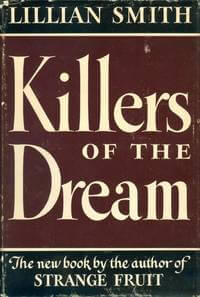
The Importance of Lillian Smith’s “Killers of the Dream” 75 Years Later in 2024

This year marks the 75th anniversary of the initial publication of Lillian Smith’s Killers of the Dream, and as I reread it this past week, I kept thinking about its continued relevance today, especially during 2024, a year which, and I do not feel this is hyperbole, carries within it a huge deal of historical significance for the United States and our democratic experiment. Countless … Read More The Importance of Lillian Smith’s “Killers of the Dream” 75 Years Later in 2024

+

Fascism Can’t Happen Here

Earlier this week, Edwidge Danticat published “It Can Happen Here” in Harper’s Bazaar. Danticat details how legislation in Florida reminds her of oppressive regimes in her Haiti and the repression of knowledge. She reminds us that no matter what we think, oppression and fascism can happen here, even if we think it can’t. The title of the article harkens back to Sinclair Lewis’ 1935 … Read More Fascism Can’t Happen Here

+

The Presence of the Past on Screamer Mountain

“Darling, phone call for you.” “I’m so tired. Can you take a message?” “It’s Martin. He wants to know if you got the card he sent last week.” “I’ll be right there. . . . Martin, it’s so good to hear your voice. How are Coretta and the kids? . . .” Every time I go up to the Lillian E. Smith Center, I think … Read More The Presence of the Past on Screamer Mountain

+

Rhetorical Intersections in Early America

Currently, I’m reading David F. Walker, Damon Smyth, and Marissa Louise’s graphic narrative of The Life of Frederick Douglass based on Douglass’ autobiographies. There are a few things from this graphic novel that I plan to write about in the near future; however, as I read it, the above panel stood out. In this panel, Douglass discusses the similarities between systems of oppression that … Read More Rhetorical Intersections in Early America