Category: hugo Martínez

+

Reading Daniel Stein’s “Strange Fruit and Bitter Roots”

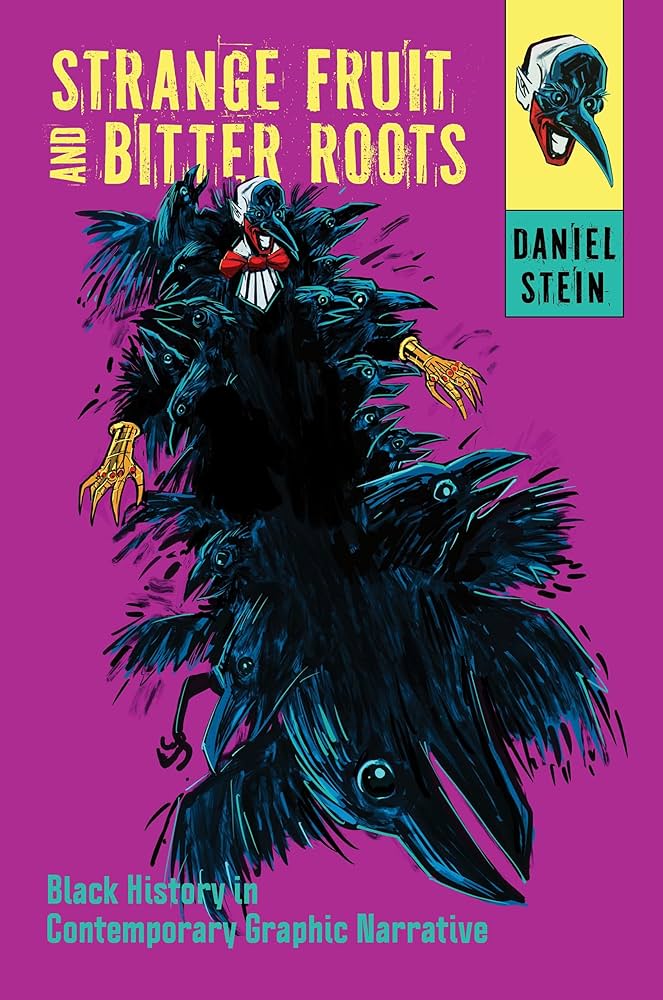
From the moment I heard about Daniel Stein’s recent book, Strange Fruit and Bitter Roots: Black History in Contemporary Graphic Narrative, I knew I wanted to read it, specifically because Stein examines numerous texts that I have used or plan to use in my courses. Stein offers a lot over the course of Strange Fruit and Bitter Roots, moving from an exploration of graphic … Read More Reading Daniel Stein’s “Strange Fruit and Bitter Roots”

+

Retrieving History in Rebecca Hall and Hugo Martínez’s “Wake”

Over the last couple of posts, I’ve been looking at Rebecca Hall and Hugo Martínez’s Wake: The Hidden History of Women-Led Slave Revolts. Today, I want to conclude this series by looking at some of the panels in the last chapter of Wake. Entitled “Ancestry in Progress,” the final chapter brings together the threads that Hall and Martínez weave throughout the text, and as I have discussed previously, … Read More Retrieving History in Rebecca Hall and Hugo Martínez’s “Wake”

+

Layouts in Rebecca Hall and Hugo Martínez’s “Wake”

Last post, I wrote about the ways that Rebecca Hall and Hugo Martínez’s Wake: The Hidden History of Women-Led Slave Revolts uses the juxtaposition of text and image to highlight the continued ways that past impacts the present. Today, I want to continue that discussion and expand it some by focusing specifically on some of Martínez’s layouts. From the opening of Wake to its … Read More Layouts in Rebecca Hall and Hugo Martínez’s “Wake”

+

The Ground Beneath Our Feet in Rebecca Hall and Hugo Martínez’s “Wake”

On a recent trip to Savannah, GA, I walked around the downtown area and visited sites such as Wormsloe, a plantation established by Noble Jones in 1736. At Wormsloe, which is a Georgia State Park, none of the materials, from the brochures to the museum to the markers around the site mentioned the enslaved who made money for Noble and his offspring. In the … Read More The Ground Beneath Our Feet in Rebecca Hall and Hugo Martínez’s “Wake”