Category: race

+

Preaching in the Wilderness: John Marrant and John the Baptist

I enjoy teaching John Marrant’s A Narrative of the Lord’s Wonderful Dealing with John Marrant, A Black (1785) for various reasons, chief among them being that Marrant’s narrative destabilizes students’ perceptions about African Americans during the early years of the republic in similar ways that Sarah Kemble Knight does with women during the colonial period and William Apess does with Native Americans later in … Read More Preaching in the Wilderness: John Marrant and John the Baptist
+

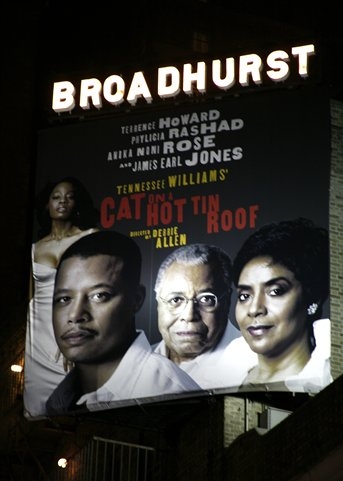
Colorblind Casting and Tennessee Williams’ “Cat on a Hot Tin Roof”

Last post, I wrote about the racial undercurrents that populate Tennessee Williams’ Cat on a Hot Tin Roof (1955). Today, I want to briefly discuss the 2008 Broadway performance of the play with an all black cast starring James Earl Jones, Phyilcia Rashad, Terrence Howard,  Anika Noni Rose, and others. While all of the actors in the Broadway performance are phenomenal across the board, … Read More Colorblind Casting and Tennessee Williams’ “Cat on a Hot Tin Roof”

+

The Undercurrents of Race in Tennessee William’s “Cat on a Hot Tin Roof”

Recently, I taught Tennessee Williams’ Cat on a Hot Tin Roof (1955) and noticed, as I reread it, the undercurrents of race that appear throughout. Over the next couple of posts, I want to explore these aspects of “playing in the dark” that buttress the story of the Politt family’s decline as Big Daddy and everyone else comes face to face with his mortality. … Read More The Undercurrents of Race in Tennessee William’s “Cat on a Hot Tin Roof”

+

George Washington Cable’s “‘Tite Poulette” and Race

Last week, I wrote about Sui Sin Far and her discussion of nationality and nationhood in Leaves from the Mental Portfolio of a Eurasian. Far highlights the arbitrary nature of of the term “nation,” and rather than holding “nationality” up for honor, she lifts individuality in its place. In a similar manner, George Washington Cable, throughout his works, illuminates the social constructions of race … Read More George Washington Cable’s “‘Tite Poulette” and Race