Category: Uncategorized

+

Identity and Race in Two Hemingway Stories

I have written about Ernest Hemingway’s In Our Time (1925) a couple of times in relation to both Ernest J. Gaines and Langston Hughes. Today, I want to examine Hemingway’s “Indian Camp” and “Fathers and Sons” in relation to how he constructs identity and privilege for Nick Adams, the protagonist of each story. In both texts, Nick’s white privilege appears through the ways that … Read More Identity and Race in Two Hemingway Stories

+

Miss Jane Pittman and the Temptation of Christ

After John the Baptist baptizes Jesus Christ in the gospels, Jesus goes into the desert for forty days and forty nights before beginning his ministry. During that time, Satan tempts Jesus three times with food, display of divination, and dominion over the world. Jesus does not succumb to these temptations, and he rebukes Satan with scripture, ultimately defeating him. As I read through Ernest … Read More Miss Jane Pittman and the Temptation of Christ

+

Choosing Which Texts to Teach or Not to Teach

Talking about Lyle Saxon’s Children of Strangers (1937) recently during the NEH Summer Institute, two questions arose: Why should we even read this novel? Should we even consider teaching it? Both of these questions are very important to consider when thinking about whether or not one should “expose” students to certain texts. In this post, I do not want to justify whether or not … Read More Choosing Which Texts to Teach or Not to Teach

+

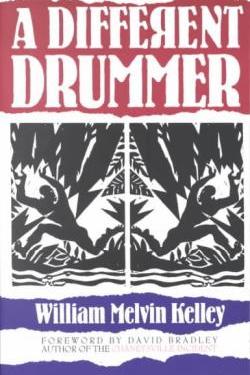
Point of View in William Melvin Kelley’s “A Different Drummer”

William Melvin Kelley’s A Different Drummer (1962) is a fascinating book, not just for the story it tells but for the way Kelley presents that story. The novel’s plot is pretty straight forward, on the surface. An African American, Tucker Caliban, buys some land from the white family that him and has ancestors have worked for since the Civil War. After he buys the … Read More Point of View in William Melvin Kelley’s “A Different Drummer”

+

Ivan Turgenev’s “Fathers and Sons” and Ernest J. Gaines

From the very beginning, Ernest J. Gaines has made his indebtedness to Ivan Turgenev, and specifically Turgenev’s Fathers and Sons (1862) known. When Gaines entered the library for the first time in California, he did not find books by African American authors; instead, he discovered, amidst the rows and rows of bound texts, books by Russian, Irish, French, and American authors who wrote about … Read More Ivan Turgenev’s “Fathers and Sons” and Ernest J. Gaines