Category: african american literature

+

The Structure of Oppression in Ernest Gaines’ “Of Love and Dust”

When teaching Ernest Gaines’ Of Love and Dust (1967) this semester, I asked students to think about the hierarchy within the novel. When constructing the hierarchy, students constructed in a horizontal manner, with Marshall Hebert at the top, Sidney Bonbon on the rung beneath him, Louise beneath Bonbon, Pauline beneath Louise, then the Black residents of the plantation on the bottom rung. On the … Read More The Structure of Oppression in Ernest Gaines’ “Of Love and Dust”

The Thirteenth Amendment and Incarceration

When Marcus encounters Pauline on the road in the quarters in Ernest Gaines’ Of Love and Dust, he becomes angry at Pauline for ignoring his advances while she accepts Bonbon’s advances towards her. He asks, “What’s the matter with you? . . . I been working up there all night like a slave, like a dog — and all on ‘count of him. What’s the … Read More The Thirteenth Amendment and Incarceration

+

Banned Books Week: Alice Walker’s “The Color Purple”

Alice Walker’s The Color Purple has been one of the most and banned challenged books since its debut in 1982. As The Banned Books Project points out, there have been “different reasons for the book being banned, including religious objections, homosexuality, violence, African history, rape, incest, drug abuse, explicit language, and sexual scenes.” The bans and challenges to The Color Purple, as we know, have nothing to do with … Read More Banned Books Week: Alice Walker’s “The Color Purple”

+

The Role of Names in Toni Morrison’s “The Bluest Eye”: Part I

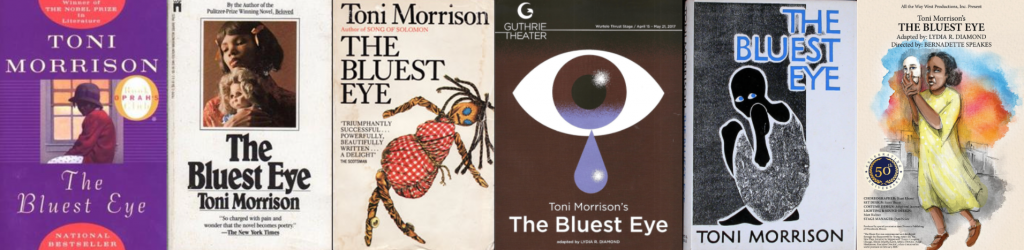
In Toni Morrison’s The Bluest Eye, Pecola goes to see Soaphead Church, a self-proclaimed “Spiritualist and Psychic Reader” who could help individuals overcome things that impacted them. Pecola comes to Soaphead Church asking him to give her blue eyes so she can feel pretty and be like the white movie stars that she idealizes. After Pecola leaves, he sits down at the table and write … Read More The Role of Names in Toni Morrison’s “The Bluest Eye”: Part I

+

Seeds and Growth in Toni Morrison’s “The Bluest Eye”

On her first novel, The Bluest Eye, Toni Morrison states that she wanted to explore the “tragic and disabling consequences of accepting rejection as legitimate, as self-evident.” While some become dangerous and violent, “reproducing the enemy who has humiliated them over and over,” others become invisible, melting away as they “collapse, silently, anonymously, with no voice to express or acknowledge” the impact of rejection. Through … Read More Seeds and Growth in Toni Morrison’s “The Bluest Eye”