Category: american literature

Stuffed Lion in “Get Out”?

Finally, during its third week in theaters, I saw Get Out (2017). Plenty of people have commented on the film; however, there are two aspects of the film that I have not found anyone discussing: the stuffed lion that sits on the nightstand next to Rose Armitage’s bed and the use of Childish Gambino’s “Redbone”playing over the audience’s first introduction to Chris Washington as … Read More Stuffed Lion in “Get Out”?

Music in Flannery O’Connor’s “Revelation”

Last post, I wrote about “When the Roll is Called Up Yonder” in Richard Wright’s “Long Black Song.” Today, I want to look at another song in a short story, this time in Flannery O’Connor’s “Revelation.” The bluegrass, gospel song “You Go to Your Church and I’ll Go to Mine” appears in “Revelation” while Ruby Turpin and her husband Claud sit in the doctor’s … Read More Music in Flannery O’Connor’s “Revelation”

“When the Roll is Called Up Yonder” in Richard Wright’s “Long Black Song”

As I reread Richard Wright’s “Long Black Song” from Uncle Tom’s Children (1938), I again thought about the role of music in Wright’s work. I have written about this before in relation to the epigraph for Wright’s collection and in relation to the song that appears in “Big Boy Leaves Home.” Today, I want to briefly look at the way that the hymn “When … Read More “When the Roll is Called Up Yonder” in Richard Wright’s “Long Black Song”

+

Some Questions about Teaching Eugene O’Neill’s “The Emperor Jones”

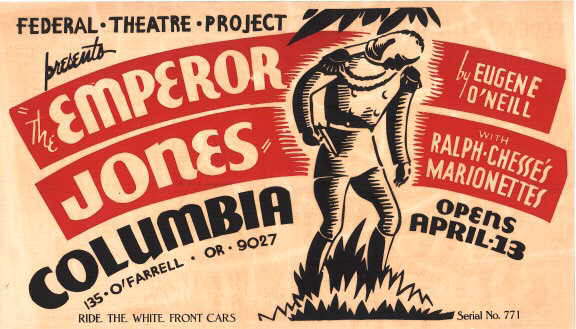
Recently, I taught Eugene O’Neill’s The Emperor Jones (1920) in my American literature survey course (1865-present). As I prepared to discuss the play with students, I struggled with what angle to take when exploring a text that contains stereotypical images of African Americans as well as images and sections that counter stereotypical assumptions about African Americans. Eventually, I settled on presenting both aspects to … Read More Some Questions about Teaching Eugene O’Neill’s “The Emperor Jones”

+

Minnie Cooper and John McClendon in Faulkner’s “Dry September”

Last Thursday, I wrote about the “blank spaces” in William Faulkner’s “Dry September” and some works by Ernest J. Gaines. Today, I want to look at a couple of scenes in Faulkner’s story and discuss the ways that Faulkner delves into the psychological effects of lynchings and racial violence on the perpetrators themselves. As such, I will briefly discuss Minnie Cooper and John McClendon … Read More Minnie Cooper and John McClendon in Faulkner’s “Dry September”