Category: american literature

+

Rebecca Harding Davis And Emerson’s Transcednentalism

In Bits of Gossip (1904), Rebecca Harding Davis tells about a dinner she had with Emerson, Hawthorne, Alcott, and others. Of the dinner conversation, she writes, “You heard much sound philosophy and many sublime guesses at the eternal verities; in fact, never were the eternal verities so discussed and pawed over and turned inside out as they were about that time, in Boston, by … Read More Rebecca Harding Davis And Emerson’s Transcednentalism

+

Why We Teach: Literature and the Presidential Election

In the Republic, Plato famously claims that there is a longstanding quarrel between philosophy and poetry, even stating that poets are nothing more than imitators and cannot relate truth to their audience, thus perverting them: “the tragic poet is an imitator, and therefore, like all other imitators, he is thrice removed from the king and from the truth.” Ralph Waldo Emerson, in Nature (1836), … Read More Why We Teach: Literature and the Presidential Election

Are We Just a Number? Henry David Thoreau and W.H. Auden

Ralph Waldo Emerson concludes his essay “Self-Reliance” (1841) with the following words: “Nothing can bring you peace but yourself. Nothing can bring you peace but the triumph of principles” (660).About seven years later, Henry David Thoreau delivered his lecture “Resistant to Civil Govermnet,” which would eventually be renamed “Civil Disobedience” after his death. Thoreau’s lecture, essentially, elaborates on the closing lines of Emerson’s essay, … Read More Are We Just a Number? Henry David Thoreau and W.H. Auden

+

Tumblr, Blogger, and Wikis in the Literature Classroom

Over the past few months, I have posted different pedagogical approaches that I have implemented in the classroom from the elevator pitch in the composition classroom to the use of archival materials in the literature classroom. Today, I want to take the moment and expand upon a couple of projects that I have used in the literature classroom.

+

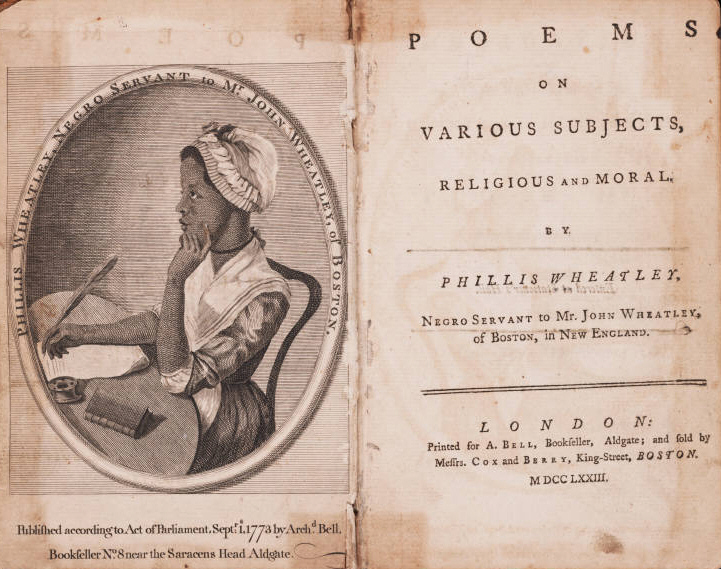
Phillis Wheatley’s “To Maecenas” and Subversion

If you enjoy what you read here at Interminable Rambling, think about making a contribution on our Patreon page.  While some critics see Phillis Wheatley as a poet who does not address racism and slavery in her poetry, some, like Frances Smith Foster, read the poet as revising “traditional poetic forms and language to accommodate new messages” and to ultimately present her writing as … Read More Phillis Wheatley’s “To Maecenas” and Subversion