Category: race

+

Community Complicity in White Supremacy in Lillian Smith’s “Strange Fruit”

Lillian Smith’s Strange Fruit ends with the lynching of Henry McIntosh and the community members’ reactions to the murder. Following Ed Anderson murder of Tracy Deen, the townspeople, specifically the poor white mill hands, seek vengeance and they accuse Henry of murdering Tracy because Henry moved Tracy’s body off of the road into the palmetto bushes. The fact that Henry is innocent doesn’t matter. The mob, … Read More Community Complicity in White Supremacy in Lillian Smith’s “Strange Fruit”

+

Lillian Smith and the “Sex-Race-Religion-Economics” Tangle

Over the past week, I’ve been reading Lillian Smith’s Killers of the Dream for my Women in the Civil Rights Memoir course and her debut novel Strange Fruit for a book club at the end of January. If memory serves, this is the third, maybe fourth, time I have read each of these books. However, I have never read them at the same time, moving back and forth between the … Read More Lillian Smith and the “Sex-Race-Religion-Economics” Tangle

+

The Role of Names in Toni Morrison’s “The Bluest Eye”: Part I

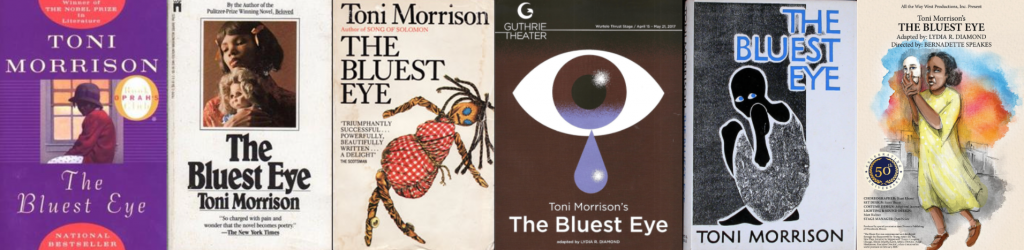
In Toni Morrison’s The Bluest Eye, Pecola goes to see Soaphead Church, a self-proclaimed “Spiritualist and Psychic Reader” who could help individuals overcome things that impacted them. Pecola comes to Soaphead Church asking him to give her blue eyes so she can feel pretty and be like the white movie stars that she idealizes. After Pecola leaves, he sits down at the table and write … Read More The Role of Names in Toni Morrison’s “The Bluest Eye”: Part I

+

“Come die with me!”: Whiteness in William Gardner Smith’s “The Stone Face”

Last post, I started looking at William Gardner Smith’s The Stone Face, a novel that, as Adam Shatz points out, presents whiteness not as a racial trait but as “a synonym for situational privilege.” Today, I want to continue that discussion by looking at Simeon’s dream sequence after he speaks with the Algerians at the cafe who call him “white.” This sequence takes place … Read More “Come die with me!”: Whiteness in William Gardner Smith’s “The Stone Face”

+

“How does it feel to be a white man?” William Gardner Smith’s “The Stone Face”

Working on my syllabus for my upcoming “Black Expatriate Writers in France” class, I came across William Gardner Smith’s The Stone Face (1963), and even though the course focuses on Southern France (Marseille and Nice), I decided to include Smith’s novel, which is set in Paris, because of its depiction of French colonial racism against Algerians and itd depiction of the Paris Massacre of … Read More “How does it feel to be a white man?” William Gardner Smith’s “The Stone Face”