Category: world war ii

+

The Unproportional Distribution of Shame: Part I

Guilt and the acknowledgment of wrongdoing constitute one’s feeling of shame. It arises when someone recognizes their culpability in an event or events and feel regret and sadness at their part in the action. On a recent episode of This American Life, Mohamadou Slahi, a man incarcerated at Guantanamo for years before his release, speaks with some of the individuals who interrogated and tortured … Read More The Unproportional Distribution of Shame: Part I

+

Home in George Takei’s “They Called Us Enemy” & John Okada’s “No-No Boy”

Over the course of George Takei’s They Called Us Enemy, home plays an important thematic role. For Takei and his family, what does home actually mean? They live in an incarceration camp for years, and Takei, the oldest of three children, is only about five or six when they enter they camp. His siblings are younger. So, when the order comes from the camps … Read More Home in George Takei’s “They Called Us Enemy” & John Okada’s “No-No Boy”

+

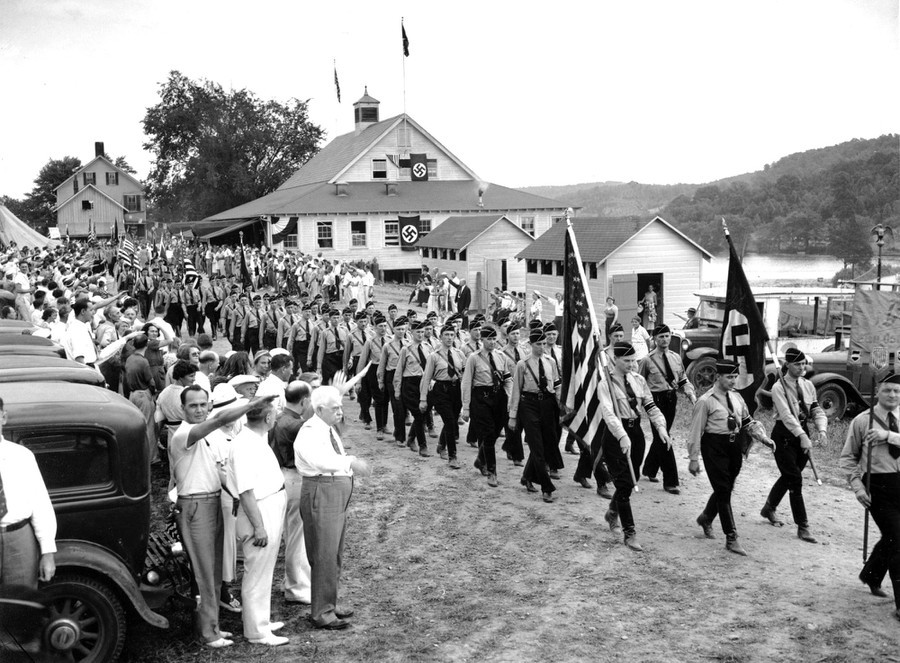
Hitler, Nazism, Jim Crow, and the United States: Part II

Last post, I started looking at the conenctions between Nazi Germany and the Jim Crow South. Today, I want to continue that examination by looking at the post-war period. In 1951, the Civil Rights Congress presented We Charge Genocide to the United Nations. The document demonstrates how the United States violated the U.N. Genocide Convention and took part in the genocide of over 15,000,000 … Read More Hitler, Nazism, Jim Crow, and the United States: Part II

+

Hitler, Nazism, Jim Crow, and the United States: Part I

In the Spring 1942-1943 issue of South Today, Lillian Smith and Paula Snelling wrote two articles: “Buying a New World with Old Confederate Bills” and “Addressed to Intelligent White Southerners: There are things to do.” Each of these articles confront the connections between the Jim Crow South, and the United States as a whole, and Nazism in Germany and the European theatre. At one … Read More Hitler, Nazism, Jim Crow, and the United States: Part I

+

Memorial Day and the Lee Street Massacre

Today, we celebrate Memorial Day in the United States, a day where we remember those who died serving their country. In May 1865, less than a month after the Confederacy surrendered, ending the Civil War, recently freed African Americans celebrated Decoration Day. On May 1, 1865, 10,000 people, largely formerly enslaved individuals, gathered and marched around the Charleston racetrack, commemorating the 260 Union soldiers … Read More Memorial Day and the Lee Street Massacre