Tag: world war ii

Conversation with Michael Dando on “Maus”

Every semester, especially when I teach asynchronous courses, I try to set up conversations with scholars and authors so that students don’t just hear and see me on the screen as they listen to the lecture. As I thought about Art Spiegelman’s Maus, I reached out to Michael Dando. I’ve spoken with Dando before about comics for his classes, specifically Luke Cage, and he … Read More Conversation with Michael Dando on “Maus”

+

Why Would I Want to do a Study Travel in Poland?

This upcoming May, if all goes well with the world, I’ll be co-leading a travel study trip to Poland with students. Over the past few months, I have been starting to read and study, as any educator does and in much more detail than I ever have before, Poland during World War II. I gave a talk in Warsaw back in December 2018, and … Read More Why Would I Want to do a Study Travel in Poland?

+

The Unproportional Distribution of Shame: Part I

Guilt and the acknowledgment of wrongdoing constitute one’s feeling of shame. It arises when someone recognizes their culpability in an event or events and feel regret and sadness at their part in the action. On a recent episode of This American Life, Mohamadou Slahi, a man incarcerated at Guantanamo for years before his release, speaks with some of the individuals who interrogated and tortured … Read More The Unproportional Distribution of Shame: Part I

+

Emotions in the Gutter: Part II

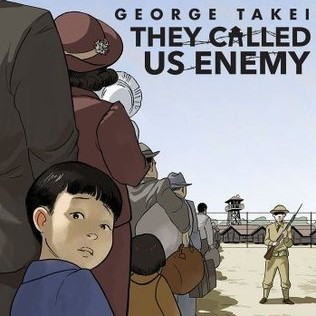
Last post, I started discussing the separation of illustrations into multiple panels in works such as March and They Called Us Enemy. Today, I want to continue that discussion by looking at some more examples in Takei’s graphic memoir and the ways that Harmony Becker separates larger images into multiple panels to highlight multiple thematic aspects of the narrative, notably the generational trauma that … Read More Emotions in the Gutter: Part II

+

Hitler, Nazism, Jim Crow, and the United States: Part II

Last post, I started looking at the conenctions between Nazi Germany and the Jim Crow South. Today, I want to continue that examination by looking at the post-war period. In 1951, the Civil Rights Congress presented We Charge Genocide to the United Nations. The document demonstrates how the United States violated the U.N. Genocide Convention and took part in the genocide of over 15,000,000 … Read More Hitler, Nazism, Jim Crow, and the United States: Part II