Month: June 2018

Reflections on EJI Legacy Museum and Memorial for Peace and Justice

Every semester, I try something new in my classroom. Recently, I’ve been working on decentering my courses in various ways, specifically through the use of active learning assignments. These involve assignments such as my archives project  or creating more student centered discussion through the questions I pose in class. This summer, I taught a minimester course in early American literature. Essentially, we met 24 … Read More Reflections on EJI Legacy Museum and Memorial for Peace and Justice

+

Josephine’s Invisibility in Kevin Sacco’s “Josephine”

Kevin Sacco’s Josephine (2017) is poignant and moving. Told only through sepia colored panels, without words, the semi-autobiographical Josephine centers on a seven year-old protagonist as he navigates Manhattan’s Upper West Side in the 1960s, guided in part by his Black caretaker, Josephine. Josephine is, as Sacco notes, a melding together “of my caretakers. . . Leonora, Cleo, Mildred, Louise, and Josephine.” Through Josephine, Sacco’s tale … Read More Josephine’s Invisibility in Kevin Sacco’s “Josephine”

+

Mediated Voices in Longfellow’s “Poems on Slavery”

Last semester, I added selections from Philip Freneau and Henry Wadsworth Longefellow to my syllabus. We only read about 3-4 poems from each author and explored them in relation to the trope of the “Vanishing American,” defining American, and the issue of slavery. As I do with most classes, I assign questions to small groups of students, 2-3 typically, give them time to answer … Read More Mediated Voices in Longfellow’s “Poems on Slavery”

“I play Monopoly with refugees”: Romans 13 and Immigration

Last week, while speaking in Fort Wayne, Indiana, Attorney General Jeff Session referenced Romans 13 as he defended the administration’s policy of separating immigrant children from their families at the border. He said, “I would cite you to the Apostle Paul and his clear and wise command in Romans 13, to obey the laws of government because God has ordained them for the purpose … Read More “I play Monopoly with refugees”: Romans 13 and Immigration

+

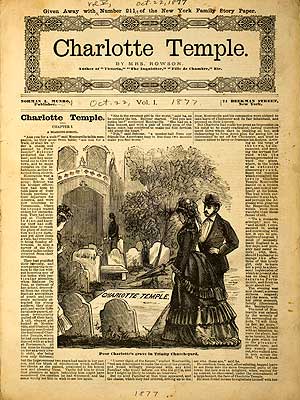
Is Susanna Rowson’s “Charlotte Temple” an American Novel?

This semester, I am teaching, for the first time, Susanna Rowson’s Charlotte Temple in my American literature survey course. Rowson’s novel fits in nicely with the other texts that I typically teach in the survey course because it provides opportunities to draw connections to texts and themes we look out over the course of the semester from women’s position during the early republic to … Read More Is Susanna Rowson’s “Charlotte Temple” an American Novel?