Month: November 2018

+

Discussing Stephen Crane’s “The Bride Comes to Yellow Sky” in the Literature Classroom

This semester, I taught Stephen Crane’s “The Bride Comes to Yellow Sky” for the first time, and there are a few aspects of the story that I think are worth considering. The first item is a hypothetical exploration of the voices we hear in the text, specifically the voices of the drummer and the eponymous bride. The second has to do with the interactions … Read More Discussing Stephen Crane’s “The Bride Comes to Yellow Sky” in the Literature Classroom

+

Exploration and Colonization in John Cheever’s “The Swimmer”

At the end of F. Scott Fitzgerald’s The Great Gatsby (1925), Nick Carraway goes over to Gatsby’s dark, empty house then heads down to the beach where he sprawls out on the sand and begins to think about the past, the time before he or Gatsby or Tom and Daisy or anyone else built enormous structures on East Egg and West Egg. He becomes … Read More Exploration and Colonization in John Cheever’s “The Swimmer”

+

Norway and Emerson!

If you enjoy what you read here at Interminable Rambling, think about making a contribution on our Patreon page.  While I ultimately see Ralph Waldo Emerson’s and the transcendentalists’ ideas as pretty little bubbles devoid of any substance, I enjoy reading Emerson’s thoughts on nature, beauty, and perception. Being in Norway this year, Emerson’s words keep coming back to me almost everyday as I … Read More Norway and Emerson!

+

Rhetorically Examining Zora Neale Hurston’s “How It Feels to be Colored Me!”

A few posts ago, I wrote about W.E.B. Du Bois and double consciousness. As part of this discussion, I looked at the ways that some artists, such as Charles Chesnutt and Frank Yerby navigated the literary landscape in relation to what readers expected from their works and how readers responded. Today, I want to briefly take a look at Zora Neale Hurston’s “How It … Read More Rhetorically Examining Zora Neale Hurston’s “How It Feels to be Colored Me!”

+

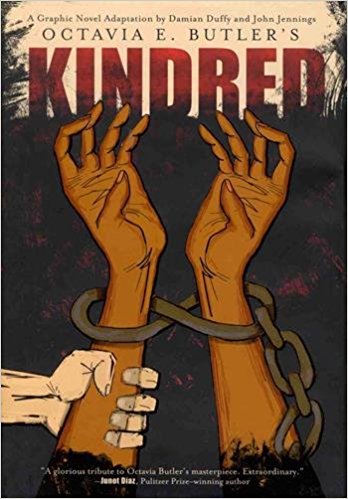
Intimacy and Hope in Duffy and Jennings’ Adaptation of Butler’s “Kindred”

The last time I read Damian Duffy and John Ira Jennings’ graphic novel adaptation of Octavia Butler’s Kindred (1979), I zeroed in on the ways that Jennings represents faces and emotion in the text, specifically through Dana, Sarah, and Rufus. In this read through, I noticed the multiple panels with hands, either embracing, playing, or in confrontation. Today, I want to take a moment … Read More Intimacy and Hope in Duffy and Jennings’ Adaptation of Butler’s “Kindred”