Year: 2019

+

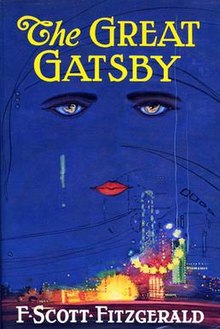
Facades in F. Scott Fitzgerald’s “The Great Gatsby”

F. Scott Fitzgerald’s The Great Gatsby (1925) challenges the mythology of the American Dream through its multiple layers of the facade that appear throughout the novel. These facades do not merely occur with Gatsby’s house or the rumors surrounding his life. Rather, they appear elsewhere, some even on a meta-level within the text. Today,  I want to briefly discuss a few of these instances. … Read More Facades in F. Scott Fitzgerald’s “The Great Gatsby”

+

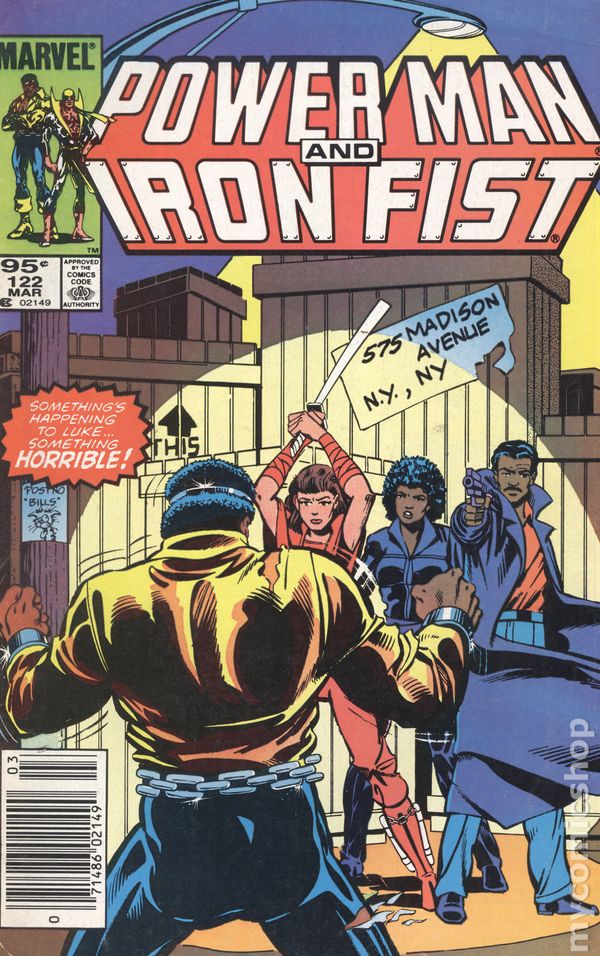
Identity in Christopher Priest’s “Power Man and Iron Fist”

Last Thursday, I wrote about Christopher Priest’s Power Man and Iron Fist #122, looking at the ways that Priest confronts Luke Cage’s publication history. Today, I want to continue that discussion through an examination of Power Man and Iron Fist #123, an issue where Priest and co-author M.D. Bright directly address issues of race. This is the only time, apart from issue #122, where … Read More Identity in Christopher Priest’s “Power Man and Iron Fist”

+

Confronting Luke Cage in Christopher Priest’s”Power Man and Iron Fist”

A few weeks ago, I published numerous posts on Luke Cage, specifically Dwayne McDuffie and M.D. Bright’s satirical take on the character through Buck Wild in Icon. At the end of that series, I also posted the #lukecagesyllabus, an extension of Tara Betts’ syllabi that she produced when the Netflix series dropped. Over the next two posts, I want to briefly look at two … Read More Confronting Luke Cage in Christopher Priest’s”Power Man and Iron Fist”

+

The Roots Beneath Our Feet

Currently, I’m working on a paper that looks at the ways that Attica Locke’s The Cutting Season, amongst other things, critiques the plantation tourism industry in the South. As I was researching, I came across Rebecca C. McIntyre’s “Promoting the Gothic South,” an article that explores the ways that travel writers, after the Civil War, began to construct images of the South, specifically in … Read More The Roots Beneath Our Feet

+

The Problematic Nature of Willa Cather’s Final Novel

When I was constructing my “Introduction to Modernism” course this semester, I decided to use Ernest J. Gaines’ work as the focal point, moving outwards from his work back into the past and towards he present, not limiting modernist thought to one particular temporal period. I did this, mainly, because Gaines, time and time again, has spoken about the influence of Modernists and Russian … Read More The Problematic Nature of Willa Cather’s Final Novel