Category: american literature

+

Mary Rowlandson and Louise Erdrich’s “Captivity”

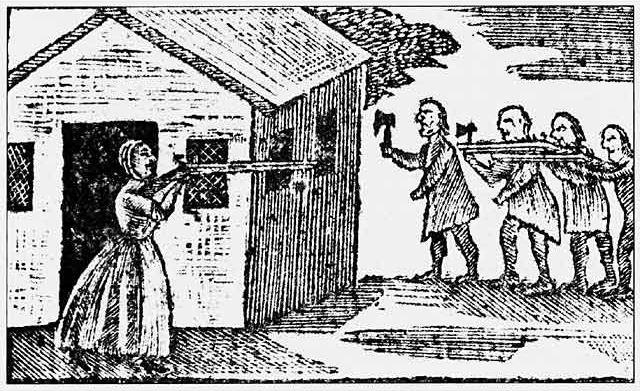
I always enjoy teaching Mary Rowlandson’s Narrative for a myriad of reasons. It presents students with an early example of that distinctly American genre the captivity narrative, it highlights the role of women in colonial America, it illuminates the colonists’ feelings towards Native Americans, and it serves as a text that showcases Puritan thought during the late 1600s. Today, I want to take the … Read More Mary Rowlandson and Louise Erdrich’s “Captivity”
+

Literacy in Octavia Butler’s “Kindred”

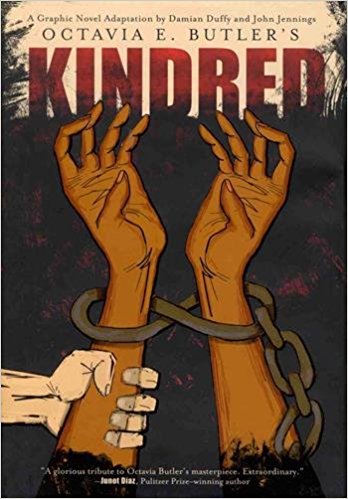
Note: For this post, I will use Duffy and Jennings’ adaptation of Butler’s Kindred. I have read Butler’s novel, but it has a been a few years. The adaptation closely follows the novel. On Tuesday, I wrote about the ways that Damian Duffy’s illustrations convey just as much emotion to the reader as Octavia Butler and John Jennings’ words in the graphic novel adaptation of … Read More Literacy in Octavia Butler’s “Kindred”

+

Conveying Emotion in Duffy and Jennings’ Adaptation of Octavia Butler’s “Kindred”

One of the key aspects of reading comics and graphic novels is paying attention not just to the words but also to the visual images that accompany them. Both the words and the images work together to create an experience that, to me, resembles a melding of a printed text and movie. When I read the March trilogy and The Silence of Our Friends, … Read More Conveying Emotion in Duffy and Jennings’ Adaptation of Octavia Butler’s “Kindred”

+

Frank Yerby’s “Health Card” and Gender

Before he started writing “costume novels,” Frank Yerby penned protest literature in the form of short stories and poems. The stories are in the vein of Richard Wright and other African American writers of the period. After failing to get his first novel length manuscript published, a protest novel, Yerby turned to what he called “costume novels,” historical narratives that subvert the plantation tradition. … Read More Frank Yerby’s “Health Card” and Gender

+

Racial Signification in Frank Yerby’s “The Foxes of Harrow”

In “Reconstructions of Racial Perception: Margaret Mitchell’s and Frank Yerby’s Plantation Romances,” Mark C. Jerng argues that Frank Yerby’s The Foxes of Harrow “engages with the specific techniques of deploying racial signification in [Gone With the Wind], in particular by when race appears in the background and when it is foregrounded.” Jerng looks at the ways that Yerby challenges and reverses the racial associations … Read More Racial Signification in Frank Yerby’s “The Foxes of Harrow”