Category: louisiana literature

+

The Juxtaposition of Beauty and Brutality in Solomon Northup’s Twelve Years a Slave

During an interview with Henry Louis Gates, Jr., Steve McQueen commented on the juxtaposition between beauty and horror in his film adaptation of Twelve Years a Slave (2013). I have written about this before in regards to the scene where Tibeats attempts to lynch Nortup. Today, I want to expand upon that discussion some more, especially after recently rereading Northup’s narrative. This time around, … Read More The Juxtaposition of Beauty and Brutality in Solomon Northup’s Twelve Years a Slave

+

“Why can’t we just move on? The past is the past.”

My own people owned people, but they don’t own that They say racism’s dead, man our President is black Two terms in the White House, that don’t mean jack If we still believe our present ain’t affected by our past–Andy Mineo “Uncomfortable” One question I hear over and over again when I speak or write about the history of racism, subjugation, and oppression in … Read More “Why can’t we just move on? The past is the past.”

+

Frank Yerby’s Benton’s Row and Southern Womanhood

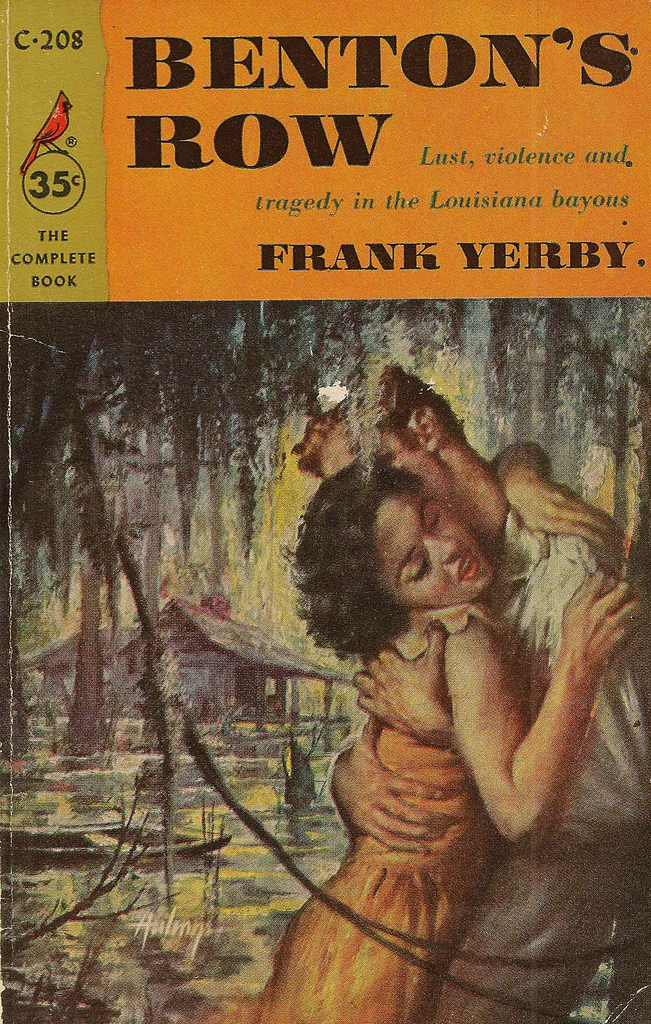
In its review (above) of Frank Yerby's Benton's Row (1954), Jet Magazine mentions the novel's early narrative arc that follows Tom Benton's arrival in the Louisiana community and his relationship with Sarah. The reviewer comments that Tom "is not at all unlike all the other Yerby heroes" and that "in the typical Yerby mold [Tom] emerges as a thoroughgoing rascal, an opportunist who seizes what … Read More Frank Yerby’s Benton’s Row and Southern Womanhood

+

Frank Yerby and the Myth of Valor

Frank Yerby’s Benton’s Row appeared in 1954, eight years after his debut novel The Foxes of Harrow (1946) In many ways, the narrative arcs are similar: a mysterious man comes to town, under mysterious circumstances, he makes a fortune, has numerous lovers, and his dynasty crumbles by the end of the novel. While The Foxes of Harrow focuses on Stephen Fox almost exclusively, ending … Read More Frank Yerby and the Myth of Valor

+

The Smoldering Embers in Our Presence

Today, I want to conclude the discussion from the previous two posts over the ways that we create memorials and remember the past, particularly in the South. In an interview with Ezra Klein, executive director of the Equal Justice Commission Bryan Stevenson commented, “What we do in the memorial spaces says a lot about who we are.” There is a lot of truth in … Read More The Smoldering Embers in Our Presence