
Category: african american literature

+

“What are we teaching when __________?” Part II of “Why can’t we just move on? The past is the past.”

Last weekend, I took a trip to Montgomery to visit the SPLC’s Civil Rights Memorial and the Rosa Parks Museum and Library. While at the Civil Rights Memorial, I came across an image that made me think about a lot of the recent posts I have been writing. Specifically, it made me think about my last post that seeks to explain why the past … Read More “What are we teaching when __________?” Part II of “Why can’t we just move on? The past is the past.”

+

“Why can’t we just move on? The past is the past.”

My own people owned people, but they don’t own that They say racism’s dead, man our President is black Two terms in the White House, that don’t mean jack If we still believe our present ain’t affected by our past–Andy Mineo “Uncomfortable” One question I hear over and over again when I speak or write about the history of racism, subjugation, and oppression in … Read More “Why can’t we just move on? The past is the past.”
+

Preaching in the Wilderness: John Marrant and John the Baptist

I enjoy teaching John Marrant’s A Narrative of the Lord’s Wonderful Dealing with John Marrant, A Black (1785) for various reasons, chief among them being that Marrant’s narrative destabilizes students’ perceptions about African Americans during the early years of the republic in similar ways that Sarah Kemble Knight does with women during the colonial period and William Apess does with Native Americans later in … Read More Preaching in the Wilderness: John Marrant and John the Baptist

+

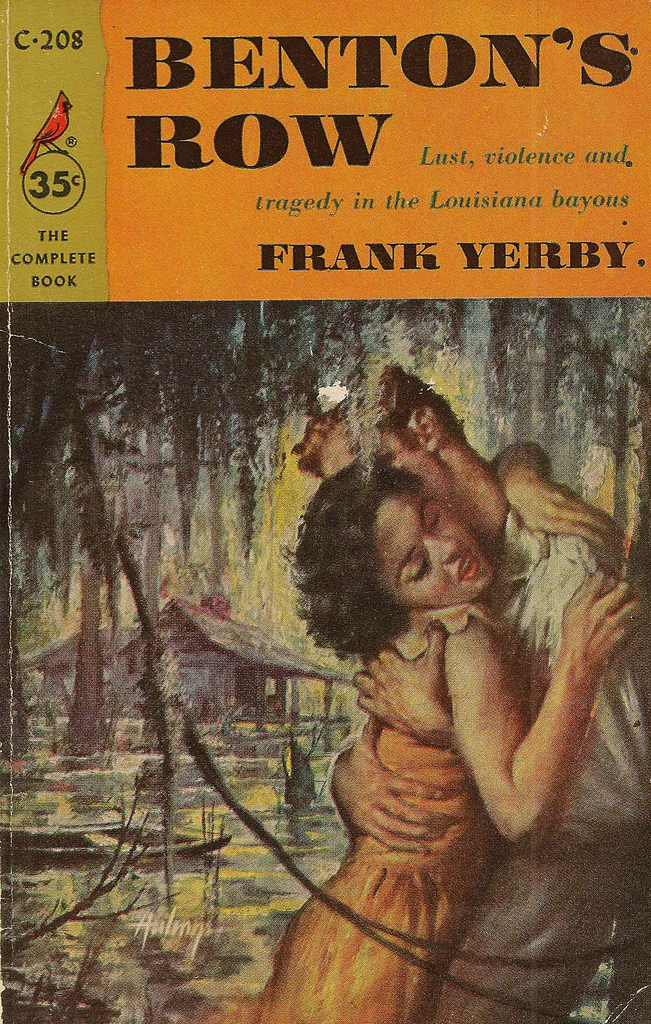
Frank Yerby’s Benton’s Row and Southern Womanhood

In its review (above) of Frank Yerby's Benton's Row (1954), Jet Magazine mentions the novel's early narrative arc that follows Tom Benton's arrival in the Louisiana community and his relationship with Sarah. The reviewer comments that Tom "is not at all unlike all the other Yerby heroes" and that "in the typical Yerby mold [Tom] emerges as a thoroughgoing rascal, an opportunist who seizes what … Read More Frank Yerby’s Benton’s Row and Southern Womanhood

+

Frank Yerby and the Myth of Valor

Frank Yerby’s Benton’s Row appeared in 1954, eight years after his debut novel The Foxes of Harrow (1946) In many ways, the narrative arcs are similar: a mysterious man comes to town, under mysterious circumstances, he makes a fortune, has numerous lovers, and his dynasty crumbles by the end of the novel. While The Foxes of Harrow focuses on Stephen Fox almost exclusively, ending … Read More Frank Yerby and the Myth of Valor