Tag: comics

+

Fannie Lou Hamer in “March”: Part I

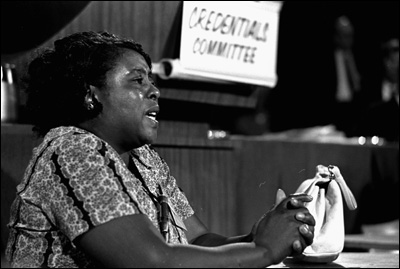
In a recent post, I wrote about a couple of individuals and events that I wish the March Trilogy spent some more time exploring. As I said in that post, I know that the trilogy could not cover everything and everyone involved in the Civil Rights Movement; however, as we move towards book three, we begin to see more of the movement outside of … Read More Fannie Lou Hamer in “March”: Part I

+

Pauli Murray and the March on Washington

Last post, I wrote about how as I reread March and Darkroom I started thinking about the gutter within these texts, the moments and individuals that the texts do not have the space or the scope to cover. I wrote about Lillian Smith’s connection to the movement, a connection that does not fit in with the narrative scope of either March or Darkroom, both … Read More Pauli Murray and the March on Washington

+

History, Comics, and the Civil Rights Movement

This semester, I am teaching two Civil Rights era memoirs: Lila Quintero Weaver’s Darkroom: A Memoir in Black and White and John Lewis, Andrew Aydin, and Nate Powell’s March Trilogy. I thoroughly enjoy these texts, and I enjoy teaching them. However, as I reread them, I keep thinking about what the texts don’t cover. I understand that each of these works are focused on … Read More History, Comics, and the Civil Rights Movement

Conversation with Tim Smyth about “March”

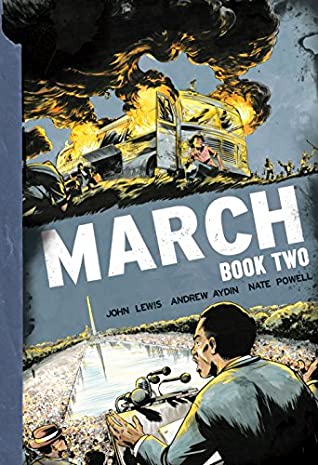
Over the course of this semester, I’ve posted conversations I’ve had with authors such as Kiku Hughes and Lila Quintero Weaver, along with scholars such as Michael Dando, Jennifer Morrison, and Eir-Anne Edgar for my Multicultural American Literature course. Today, I want to share the discussion I had with educator Tim Smyth about John Lewis, Andrew Aydin, and Nate Powell’s March: Book Two. Tim … Read More Conversation with Tim Smyth about “March”

+

The Quotidian in Art Spiegelman’s “Maus”: Part II

In the previous post, I started looking at Art Spiegelman’s Maus and the ways that he focuses on individuals, not on the high ranking officials, who both perpetrated and survived the Holocaust. Along with this, Spiegelman highlights the ways that memory, especially as it relates to a traumatic event such as the Holocaust, is slippery in so many ways. I always think about George … Read More The Quotidian in Art Spiegelman’s “Maus”: Part II