Category: african american literature

+

Everett K. Ross as Mephisto? Positioning in Christopher Priest’s Black Panther

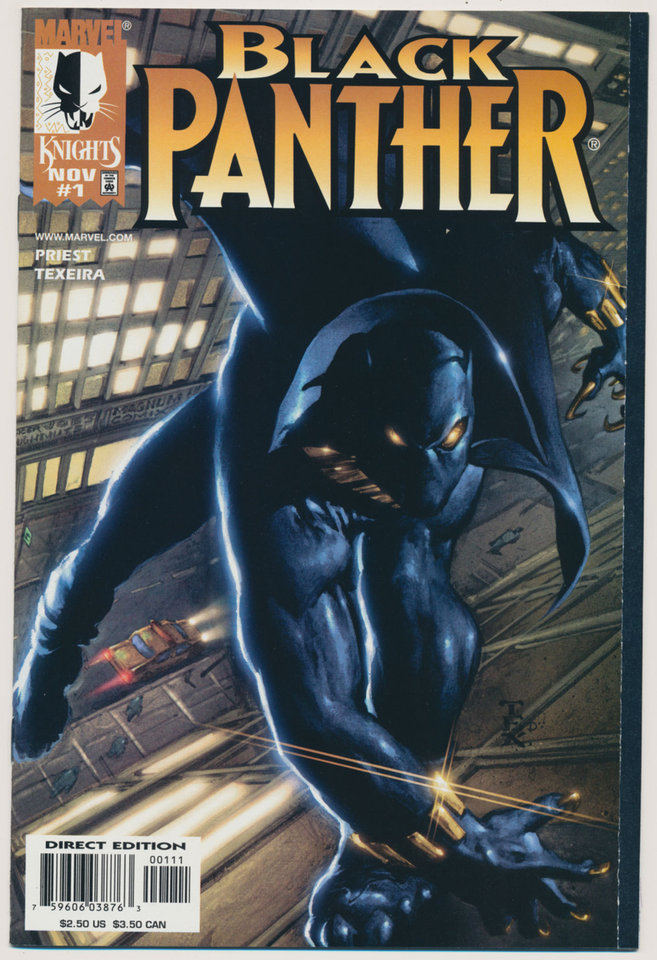
In the previous post, I wrote about the narrative point-of-view (pov) in Christopher Priest’s Black Panther (1998-2003). There, I discussed Priest’s comments about placing Everett K. Ross as the narrator of Black Panther and how that narrative position related to the work of Quentin Tarantino. Today, I want to look at a shift that occurs in issue #34, part one of “Gorilla Warfare.” Ross’ … Read More Everett K. Ross as Mephisto? Positioning in Christopher Priest’s Black Panther
+

Everett K. Ross “Emperor of Useless White Boys” in Christopher Priest’s Black Panther
Over the past few weeks, I have been working my way through Christopher Priest’s Black Panther (1998-2003). There are numerous aspects of Priest’s run that could, and should, be discussed; however, I want to focus on one aspect that I have been looking at in other works as well, the narrative point-of-view (pov). For Black Panther, Priest chose to convey the story from the … Read More Everett K. Ross “Emperor of Useless White Boys” in Christopher Priest’s Black Panther

Luke Cage, Stagolee, and the Importance of Myth

Mike Benson and Adam Glass’Luke Cage Noir (2009-2010) pulls from a Noir aesthetic full of femme fatales, double crosses, and private eyes all within Prohibition Era Harlem. The story turns Luke Cage into a Noir protagonist that struggles with life outside of prison, ultimately killing himself at the end of issue #4. It is Luke Cage’s death that struck me in this story, and … Read More Luke Cage, Stagolee, and the Importance of Myth

+

Unheard Voices and “Truth: Red, White, and Black”

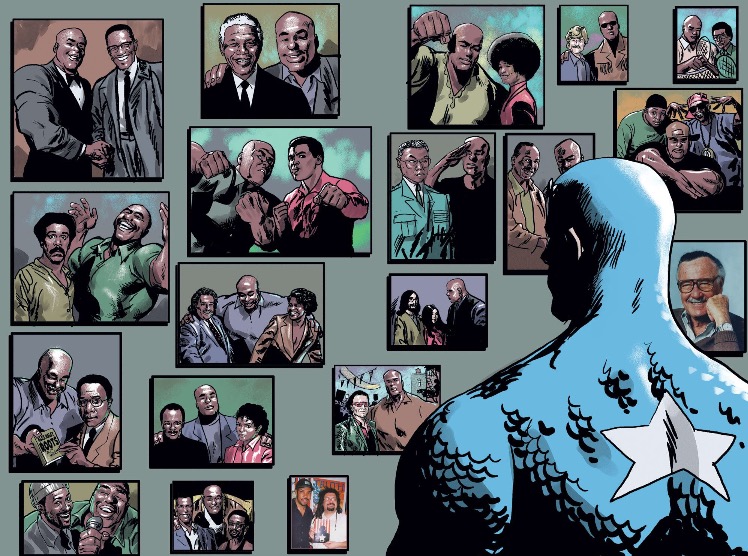
Put a dollar to your ear, you can hear the moaning of a slave America the great was built off the labor that they gave–Sho Baraka “Maybe Both, 1865” Over the past few weeks, I have been reading through various story arcs and volumes in the Marvel Universe. Specifically, I am reading Christopher Priest’s Black Panther (1998-2003), Mike Benson’s Luke Cage: Noir (2009), and … Read More Unheard Voices and “Truth: Red, White, and Black”

+

William Melvin Kelley’s “The Servant Problem” and the Domestic Sphere

Last Thursday, I wrote about William Melvin Kelley’s “The Only Man on Liberty Street” from his 1964 short story collection Dancers on the Shore. Today, I want to take a moment to look at another story in that collection, “The Servant Problem,” exploring the ways that Kelley addresses the domestic space and sexual policing of black bodies, topics that occur in “The Only Man … Read More William Melvin Kelley’s “The Servant Problem” and the Domestic Sphere