Category: Literature

+

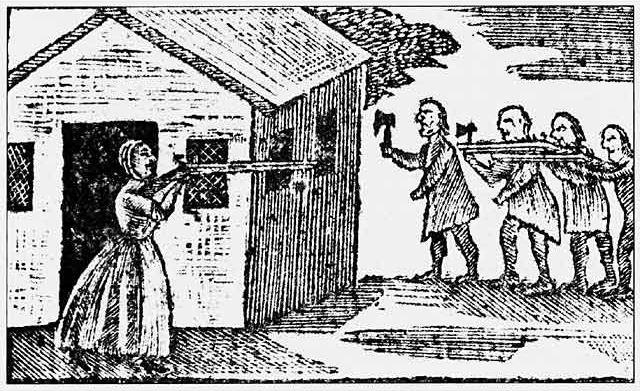
Mary Rowlandson and Louise Erdrich’s “Captivity”

I always enjoy teaching Mary Rowlandson’s Narrative for a myriad of reasons. It presents students with an early example of that distinctly American genre the captivity narrative, it highlights the role of women in colonial America, it illuminates the colonists’ feelings towards Native Americans, and it serves as a text that showcases Puritan thought during the late 1600s. Today, I want to take the … Read More Mary Rowlandson and Louise Erdrich’s “Captivity”

+

Racial Signification in Frank Yerby’s “The Foxes of Harrow”

In “Reconstructions of Racial Perception: Margaret Mitchell’s and Frank Yerby’s Plantation Romances,” Mark C. Jerng argues that Frank Yerby’s The Foxes of Harrow “engages with the specific techniques of deploying racial signification in [Gone With the Wind], in particular by when race appears in the background and when it is foregrounded.” Jerng looks at the ways that Yerby challenges and reverses the racial associations … Read More Racial Signification in Frank Yerby’s “The Foxes of Harrow”

+

African American Literature and the American Dream Syllabus

Whenever I teach an American literature survey course, the topic of the American Dream inevitably comes up. Typically, I ask students to define this mythological term and they reply with the standard answer, “The American Dream means happiness and success.” I elaborate upon this response by pointing them back, first to the Declaration of Independence, then to other texts. The Declaration states that “life, … Read More African American Literature and the American Dream Syllabus

+

Active Learning in the Literature Classroom

Over the past few semesters, I began my early American literature course with Thomas Jefferson. Starting with Jefferson’s Declaration of Independence, Notes from the State of Virginia, and letter to Benjamin Banneker was important considering the recent events in Charlottesville, VA. Typically, I start the first class with David Walker then back track to Jefferson, but after reading Ibram X. Kendi’s “What would Jefferson … Read More Active Learning in the Literature Classroom

+

Ernest J. Gaines’ “The Tragedy of Brady Sims”

Speaking with Jerome Tarshis in 1974, Ernest Gaines spoke about his desire to write a story with “that barber shop type of thing” where people gather around a community center and relate stories about the past and the present. Looking at James Joyce’s “Ivy Day in the Committee Room” as an example, Gaines told Tarshis, “I think is one of the greatest short stories that … Read More Ernest J. Gaines’ “The Tragedy of Brady Sims”