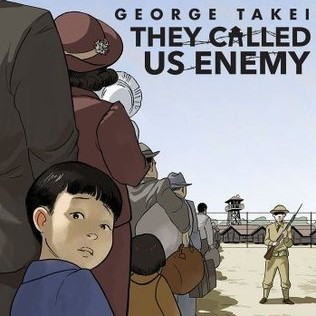
Category: they called us enemy

+

Emotions in the Gutter: Part II

Last post, I started discussing the separation of illustrations into multiple panels in works such as March and They Called Us Enemy. Today, I want to continue that discussion by looking at some more examples in Takei’s graphic memoir and the ways that Harmony Becker separates larger images into multiple panels to highlight multiple thematic aspects of the narrative, notably the generational trauma that … Read More Emotions in the Gutter: Part II

+

The Emotions in the Gutter

Recently, a colleague asked me to participate in a reading with him. He read selection from his latest poetry collection, and during the Q&A following our readings, he spoke about the ways that he constructed some of the poems he read. During his response, he began to speak about a poem he didn’t read, “Nocturne,” a poem which deals with death, intimacy, and loss. … Read More The Emotions in the Gutter

+

Photographs and Memory in Thi Bui’s “The Best We Could Do”: Part III

Over the last two posts, I have looked at the ways that Thi Bui deploys photographs in her graphic memoir The Best We Could Do, exploring how these photographs function not only in relation to the narrative but also in relation to the construction of memory within in the text. Today, I want to finish my examination of photographs and memory in Bui’s graphic … Read More Photographs and Memory in Thi Bui’s “The Best We Could Do”: Part III

Contaminación of Memory

In Soledad Marambio’s Retazos Una conversación con Sylvia Molloy, the Argentinian writer speaks about memory, writing, and the passage of time. When talking about two of the houses where she lived–her parent’s house in Argentina and one she owned in Long Island–Molloy talks about their similarities, specifically the courtyards. The two houses, due to some of the similarities, mingle within her mind, joining together … Read More Contaminación of Memory

Fences in George Takei’s “They Called Us Enemy”

Some of the strongest symbols within George Takei’s They Called Us Enemy are the fences that surround Rohwer and Tule Lake interment camps. There are multiple panels depicting the barbed wire fences, and various angles occur in each of the panels. These images, coupled with Takei’s words, highlight the psychological effects of xenophobia and racism on individuals, especially children such as Takei. I have … Read More Fences in George Takei’s “They Called Us Enemy”