Category: southern literature

+

I’m the Victim of America’s Sin. I’m What Sin Is.

Over the last couple of posts, I have written about Jeff Nichols’ Loving and the legal constructions of race. Today, I want to conclude that discussion by looking some at Jean Toomer’s Cane (1923) and Ernest J. Gaines’ The Autobiography of Miss Jane Pittman (1971). In each of these texts, published close to fifty years apart, Toomer and Gaines highlight the ways that words … Read More I’m the Victim of America’s Sin. I’m What Sin Is.

+

“Everything would be the same–as it always was.”

In last Thursday’s post, I wrote about the image of dirt in Lillian E. Smith’s Strange Fruit (1944). Today, I want to continue looking at Smith’s novel. Instead of focusing on Tracy Dean as I did in the last post, I want to take a moment and examine the ways that Nonnie and Bess Anderson, along with Dessie, react to what occurs in the … Read More “Everything would be the same–as it always was.”

+

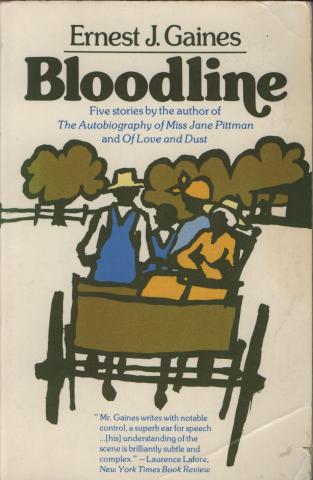
Interracial Intimacy in Ernest Gaines’ “Bloodline”

As I read Ernest Gaines’ “Bloodline” recently, the interactions between ‘Malia and Frank Laurent stood out. The story, essentially, centers around Copper, the son of Frank’s brother Walter who raped Copper’s mother. Copper has returned to the Laurent plantation to claim what is his, by birth. Essentially, he arrives to overthrow the system that denies him an existence due to the fact that his … Read More Interracial Intimacy in Ernest Gaines’ “Bloodline”

+

Rhetorically Examining Zora Neale Hurston’s “How It Feels to be Colored Me!”

A few posts ago, I wrote about W.E.B. Du Bois and double consciousness. As part of this discussion, I looked at the ways that some artists, such as Charles Chesnutt and Frank Yerby navigated the literary landscape in relation to what readers expected from their works and how readers responded. Today, I want to briefly take a look at Zora Neale Hurston’s “How It … Read More Rhetorically Examining Zora Neale Hurston’s “How It Feels to be Colored Me!”

+

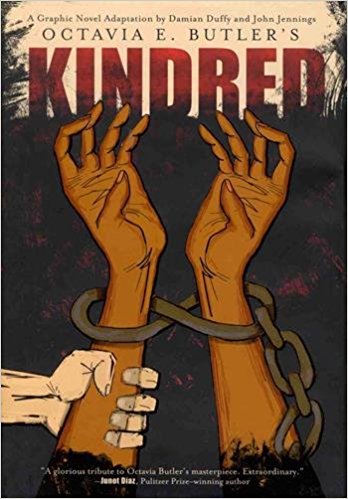
Intimacy and Hope in Duffy and Jennings’ Adaptation of Butler’s “Kindred”

The last time I read Damian Duffy and John Ira Jennings’ graphic novel adaptation of Octavia Butler’s Kindred (1979), I zeroed in on the ways that Jennings represents faces and emotion in the text, specifically through Dana, Sarah, and Rufus. In this read through, I noticed the multiple panels with hands, either embracing, playing, or in confrontation. Today, I want to take a moment … Read More Intimacy and Hope in Duffy and Jennings’ Adaptation of Butler’s “Kindred”